Silicone Series: Premium Water-Based Printing Materials for Elastic & Durable Textile Prints
In the competitive global textile printing sector, the Silicone Series refers to a complete lineup of silicone-based printing pastes and inks specially developed for fabric decoration, functional printing and digital textile processing. Unlike traditional acrylic printing pastes, this material family features outstanding elasticity, soft hand feel, low-temperature resistance and strong adhesion, making it a mainstream choice for elastic fabrics, functional textiles and high-value printed products. For print factories, garment manufacturers and outdoor goods producers, selecting a reliable Silicone Series is the key to solving common printing defects such as pattern cracking after stretching, peeling after washing and stiff fabric texture.
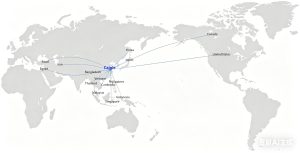
Guangdong Caigle Science&Technology Co., Ltd., founded in 2009, is a leading manufacturer of water-based textile printing materials. With a 30,000 square meters modern production plant and an annual output of 50,000 tons, we strictly follow ISO quality management and environmental protection standards throughout production. Our product portfolio covers Paste Series, Digital Coating Ink Series, Silicone Series and Shoe Materials Series, forming a one-stop supply system for textile printing enterprises. You can explore detailed product parameters, technical reports and factory qualifications via our official website: https://www.caigle.com.cn/. After years of formula iteration, our Silicone Series has reached international advanced standards, balancing high performance, environmental compliance and cost-effectiveness, and is widely exported to Southeast Asia, Europe, America and other global markets.
As consumer demands for textile comfort and durability keep rising, ordinary printing materials can no longer adapt to elastic fabrics, outdoor textiles and skin-friendly apparel. The unique molecular structure of the Silicone Series enables it to synchronize deformation with fabrics, maintain stable printing effects in complex usage environments, and help enterprises improve product pass rate and market competitiveness. Whether for small-batch customized printing or large-scale industrial mass production, this mature product line can fully meet diversified production needs.
Silicone Series
1.2 Core Performance Advantages of Standard Silicone Series
A high-quality Silicone Series stands out from common printing materials with seven core functional advantages, which fully address various pain points in actual printing production. Each performance is verified through long-term production tests and market feedback:
Super High Elasticity & Crack Resistance: The cured film of products in the Silicone Series can stretch multiple times without cracking or breaking. It fits perfectly with spandex, nylon blended fabrics and other elastic materials, and remains intact even after repeated pulling and bending, which is the most prominent advantage over traditional printing pastes.
Excellent Washing & Friction Fastness: The silicone component forms a tight combination with fabric fibers. After dozens of machine washes and hand washes, the printed pattern will not peel or fade. It also resists long-term strong friction, suitable for luggage, shoe materials and frequently worn garments.
Ultra-Soft Hand Feel & Anti-Sticking Property: As a water-based eco-friendly material, the Silicone Series will not form a hard coating on the fabric surface. The printed area retains the original soft texture of textiles, and no adhesion occurs after long-term stacking and extrusion, ideal for close-fitting clothing and bedding products.
Low-Temperature & High-Temperature Stability: The finished printed layer will not become brittle and crack in low-temperature environments, nor melt or deform under normal high-temperature storage. It adapts to extreme temperature changes and is widely used in outdoor textiles and cross-regional exported goods.
Vivid Color Reduction & 3D Stereo Effect: When mixed with water-based color paste, the Silicone Series presents bright, uniform and full colors. It can also create distinct 3D embossed effects, enriching the decorative style of printed patterns and meeting the customization needs of high-end branded products.
Eco-Friendly & Full Compliance: All formulas of the Silicone Series are free of formaldehyde, APEO and harmful plasticizers, with low VOC emissions. They have passed OEKO-TEX Standard 100 and other international certifications, safe for children’s clothing and skin-contact textiles.
Stable Viscosity & Smooth Printing: The entire Silicone Series maintains stable viscosity under normal production temperature. It has good fluidity during screen printing and digital printing, will not block mesh screens, and is compatible with manual, semi-automatic and fully automatic printing equipment.
Silicone Series
2. Classifications and Detailed Applications of Silicone Series
2.1 Main Product Classifications of Caigle Silicone Series
According to production processes, fabric types and functional requirements, our Silicone Series is divided into multiple professional sub-models, each targeting specific printing scenarios to achieve targeted performance:
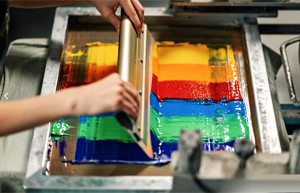
Screen Printing Silicone Paste: This is the most classic category of the Silicone Series, mainly used for manual screen printing and mechanical screen printing. It is available in transparent, white and color base types, with moderate viscosity and easy operation. It is the preferred material for garment patterns, brand logos and decorative prints on daily fabrics.
Digital Printing Matching Silicone Primer: Developed for digital textile printing production lines, this product acts as a bottom coating. It improves the ink adsorption capacity of fabrics, makes digital patterns clearer and more layered, and complements Digital Coating Ink Series to form a complete digital printing solution.
High-Elastic Silicone for Swimwear & Sportswear: Optimized for high-elastic spandex and nylon-spandex blended fabrics. It enhances stretch resilience and anti-fatigue performance, and will not deform after long-term repeated stretching, specially tailored for yoga clothes, swimwear and professional sportswear.
Functional Silicone for Outdoor & Shoe Materials: With enhanced weather resistance and wear resistance, this sub-series is applied to coated nylon cloth, Oxford cloth and shoe upper fabrics. It resists sun exposure, rain erosion and frequent friction, ensuring long-term stable printing effects on outdoor supplies and shoe accessories.
Each sub-product in the Silicone Series adopts independent formula design. Customers can select corresponding models according to their own fabric types and processes, avoiding performance waste caused by using universal materials.
2.2 Typical Fabric Types Suitable for Silicone Series
The Silicone Series has strong fabric compatibility, covering most mainstream chemical fiber, blended and partial natural fiber fabrics in the printing industry. Its applicable range is wider than single-function printing pastes:
First of all, elastic chemical fiber fabrics are the most matched materials for the Silicone Series, including pure spandex, nylon-spandex blends, polyester-spandex blends and elastic knitted fabrics. These fabrics are widely used in sportswear and swimwear, and the high elasticity of silicone materials can perfectly adapt to their deformation characteristics. Secondly, all kinds of nylon fabrics, including ordinary nylon cloth, waterproof coated nylon and nylon woven belts, can obtain excellent adhesion and durable printing effects with the support of the Silicone Series.
In addition, the Silicone Series also performs well on thick Oxford cloth, canvas and blended fabrics for luggage and umbrellas. For partial cotton-nylon blended fabrics and thin decorative fabrics, it can also be used as an alternative printing material to balance elasticity and hand feel. Compared with general printing pastes, the Silicone Series has fewer restrictions on fabric types, which helps printing factories simplify material procurement categories and reduce inventory pressure.
2.3 Industrial Application Fields of Silicone Series
Relying on comprehensive performance advantages, the Silicone Series runs through multiple downstream industries of textile printing, and the terminal products are diverse and widely distributed:
Garment Printing Industry: This is the largest application field of the Silicone Series, covering casual wear, sportswear, swimwear, down jackets, children’s clothing and intimate apparel. These products require soft hand feel, stretch resistance and washing resistance, and the Silicone Series fully meets these strict quality standards.
Luggage, Umbrellas & Outdoor Supplies: Backpacks, suitcases, outdoor tents and rain umbrellas are mostly made of thick nylon and coated fabrics. The Silicone Series with excellent weather resistance and friction resistance ensures that brand logos and decorative patterns remain intact for a long time in outdoor environments.
Shoe Materials & Textile Accessories: Shoe uppers, shoelaces, woven belts and clothing labels often use the Silicone Series for fine pattern printing. Its good flexibility ensures that the printed layer will not fall off during shoe bending and fabric pulling.
Home Textiles & Decorative Fabrics: Decorative cloth, bedding and soft ornaments require eco-friendly materials and comfortable hand feel. The safe and soft Silicone Series is the ideal choice for home textile printing, creating high-quality and skin-friendly finished products.
Silicone Series
3. Standard Operation Guidelines for Using Silicone Series
3.1 Scientific Mixing Ratio for Silicone Series
Reasonable mixing is the premise to fully release the performance of the Silicone Series. According to different fabric and printing requirements, we divide it into conventional formula and enhanced formula for standardized operation:
Conventional Formula (Ordinary Elastic Fabrics & Daily Garments): Take 75% to 90% of the Silicone Series base material, add 10% to 25% of purified water, and mix with 2% to 3% of environmental thickener. Use a high-speed dispersing machine to stir evenly for 3 to 5 minutes at a constant speed. This formula balances hand feel, elasticity and adhesion, suitable for most conventional printing jobs.
Enhanced Formula (Waterproof Fabrics & High-Frequency Stretching Products): On the basis of the conventional formula, add 2% to 5% of special curing agent to improve water resistance and peeling resistance. After mixing, please use up the slurry within 8 hours to avoid performance attenuation caused by long-term placement.
Color Matching Operation: When preparing color printing materials, take the Silicone Series as the base, add water-based color paste in batches and stir synchronously. Do not add a large amount of color paste at one time to prevent uneven color mixing. After color matching, filter the mixed slurry with a 100–180 mesh filter screen to remove tiny impurities and prevent screen clogging.
3.2 Drying & Curing Parameters for Silicone Series
Drying and curing directly determine the final elasticity and fastness of the Silicone Series. Enterprises can select appropriate processes according to production scale and site conditions:
Natural Air Drying: Under the ambient temperature of 20℃ to 30℃, the surface of the Silicone Series slurry dries within 20 to 35 minutes, and it is completely cured within 8 to 12 hours. It is suitable for small-batch proofing, customized orders and workshops without heating equipment.
Thermal Curing (Recommended for Mass Production): After printing, send the fabrics to the drying equipment for thermal treatment at 120℃ to 150℃ for 3 to 10 minutes. Sufficient thermal cross-linking can maximize the comprehensive performance of the Silicone Series. Note that the temperature should not be too high to avoid shrinkage and deformation of chemical fiber fabrics.
Optimal Performance Period: After thermal curing, place the finished products for 72 hours. At this time, the molecular cross-linking of the Silicone Series is completely completed, and elasticity, anti-sticking and washing fastness reach the best state. It is recommended to conduct quality inspection after 72 hours to ensure accurate quality judgment.
3.3 Daily Storage Management for Silicone Series
Correct storage can maintain the stable performance of the Silicone Series for a long time and avoid unnecessary losses. All products of the series need to follow unified storage specifications:
Store the sealed original products in a ventilated, dry and cool warehouse, with the ambient temperature controlled between 5℃ and 35℃. Keep away from direct strong sunlight and low-temperature freezing environments. High temperature will accelerate water volatilization and cause slurry thickening, while low temperature will lead to emulsion delamination and performance decline.
The shelf life of unopened original Silicone Series products is 12 months. After opening the container, seal it tightly in time and use all materials within 3 months. If slight delamination occurs after long-term storage, stir it evenly before use. Once peculiar smell, agglomeration or mildew appears, stop using it immediately to prevent defective printed products.
4. Common Problems and Solutions When Using Silicone Series
4.1 Pattern Cracking During Fabric Stretching (Silicone Series)
Pattern cracking is a typical problem when using printing materials on elastic fabrics, and it also occurs occasionally when operating the Silicone Series. The main reasons include insufficient elasticity of selected sub-models, incomplete curing and unreasonable formula ratio. Solutions: First, replace with high-elasticity models in the Silicone Series for super-elastic fabrics such as swimwear. Second, extend the thermal curing time appropriately to ensure full molecular cross-linking. Third, reduce the proportion of curing agent and thickener to avoid reducing the flexibility of the silicone film.
4.2 Poor Adhesion & Pattern Peeling of Silicone Series
When the printed layer peels off from the fabric surface, it means the combination between the Silicone Series and fibers is insufficient. The core causes are fabric surface contamination and improper formula. Before printing, thoroughly remove oil stains and static electricity on nylon and waterproof fabrics to eliminate the isolation layer on the surface. For fabrics that are difficult to adhere to, add an appropriate amount of curing agent and reduce the amount of water added to ensure the effective content of silicone resin.
4.3 Screen Clogging in Silicone Series Printing Process
Screen clogging will interrupt continuous production and reduce efficiency. The main triggers are impure slurry and excessive viscosity. Filter the mixed Silicone Series slurry strictly before use to remove particle impurities. If the viscosity is too high and the fluidity is poor, add a small amount of purified water to adjust it. During long-term continuous printing, clean the mesh screen regularly to prevent dried silicone residues from accumulating.
4.4 Sticking Phenomenon of Printed Products (Silicone Series)
The sticking problem after product stacking is mostly caused by incomplete curing or improper formula. For products processed by natural drying, extend the drying time to ensure thorough curing. If sticking still occurs after full curing, add a special anti-sticking agent to the Silicone Series in a reasonable proportion, which can form a protective film on the surface without affecting elasticity and adhesion.
5. Why Choose Caigle Silicone Series for Long-Term Cooperation
5.1 Large-Scale Factory & Stable Production Capacity
Established in 2009, Guangdong Caigle Science&Technology Co., Ltd. has two professional production bases in Qingyuan and Zhongshan, China, with a total factory area of 30,000 square meters and an annual production capacity of 50,000 tons. All products including the Silicone Series are produced on standardized production lines in strict accordance with ISO quality and environmental protection systems. Every batch of materials will undergo multiple sampling inspections before leaving the factory to ensure consistent quality. Even in the peak production season with surging orders, we can stably deliver goods to global customers and solve the problem of raw material shortage.
3
We have a dedicated R&D team focusing on textile silicone materials. Aiming at the evolving fabric technology, new printing processes and changing market demands, we continuously optimize the formula of the Silicone Series. From basic elasticity improvement to environmental upgrade and digital printing adaptation, we have completed multiple product iterations. We can provide both standard products and customized formulas for special fabrics and special functional requirements, helping customers solve personalized printing quality problems. Our R&D concept is to create high-performance and cost-effective materials to create greater value for partners.
5.3 Full Compliance Certifications & Low Operational Risks
All products in our Silicone Series have passed international environmental protection certifications such as OEKO-TEX Standard 100 and REACH. They contain no formaldehyde, APEO and harmful substances, fully complying with the import standards of Europe, America, Southeast Asia and other regions. For export-oriented printing enterprises, choosing our Silicone Series can completely avoid customs detention, order losses and brand reputation damage caused by non-compliant raw materials. Meanwhile, low VOC emissions also help customers smoothly pass domestic factory environmental inspections.
5.4 High Cost-Effectiveness & One-Stop Technical Services
We adhere to the business philosophy of “Half Cost, Double Profit”. While guaranteeing the superior performance of the Silicone Series, we reasonably control production costs and create higher profit margins for customers. Our complete product line covers Paste Series, Digital Coating Ink Series, Silicone Series and Shoe Materials Series, realizing one-stop procurement for textile printing enterprises and reducing procurement cycles and logistics costs. In addition, we provide free full-cycle technical guidance. Our professional engineers guide formula matching, process adjustment and fault solving according to customers’ actual production conditions, helping teams quickly master operation skills and reduce rework losses.
6. FAQ about Silicone Series and Silicone Printing Materials
6.1 Q1: Is the Silicone Series suitable for 100% pure cotton fabrics?
A: The Silicone Series is mainly developed for elastic chemical fiber fabrics and blended fabrics. It can be used on pure cotton fabrics temporarily, but the hand feel and coverage are not as good as special cotton printing paste. For long-term pure cotton printing, we recommend our professional cotton paste series.
6.2 Q2: Do all products in the Silicone Series need to add curing agent?
A: No. For ordinary elastic fabrics and daily printed products, there is no need to add curing agent. Curing agent is only suggested for waterproof fabrics, outdoor supplies and products with ultra-high washing fastness requirements. Excessive curing agent will reduce the softness and elasticity of the silicone film.