
Textile manufacturers face an ongoing challenge: producing attractive printed designs while maintaining the comfort, flexibility, and original character of the fabric. For garments, sportswear, footwear materials, bags, umbrellas, bedding, and decorative textiles, the printing material can significantly influence the final product’s appearance and feel.
The Breathable Paste Series is worth evaluating when textile printing projects require particular attention to printed-surface comfort and hand feel. However, selecting a suitable material involves more than comparing product names. Buyers need to consider fabric composition, printing method, graphic coverage, production conditions, quality expectations, and total manufacturing cost.
For screen printing factories, garment manufacturers, textile coating processors, and overseas printing-material distributors, a structured selection process can help reduce trial-and-error during production. This guide explains the key considerations for evaluating breathable printing paste, preparing samples, and working with a textile printing material supplier such as Caigle.
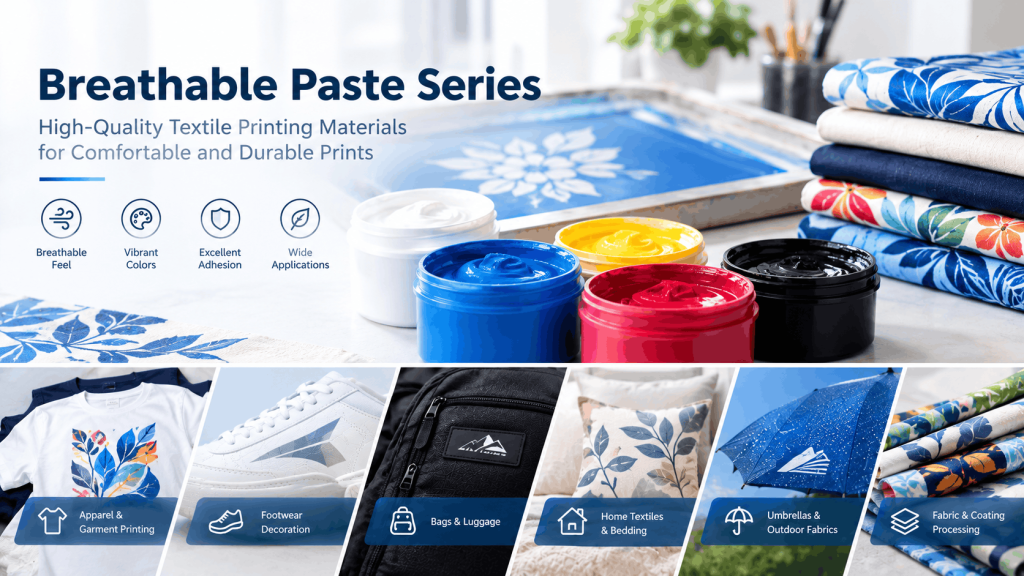
What Is the Breathable Paste Series?
The Breathable Paste Series is a category of textile printing materials intended for applications where the feel of the printed fabric is an important part of the finished product.
In textile printing, the deposited material forms a layer on the fabric surface. Depending on the formulation, print thickness, fabric structure, and curing process, this layer may change how the textile feels when touched or worn. Manufacturers therefore need to balance the visual requirements of a design with the desired surface characteristics.
A breathable printing paste may be considered when a project prioritizes a more comfortable printed area rather than an unnecessarily heavy or stiff finish. The actual result, however, depends on the selected formulation and production process. Buyers should confirm suitability through sample testing rather than assume that every breathable paste will perform identically.
Why Breathable Printing Matters to B2B Buyers
For B2B manufacturers, material decisions influence more than the appearance of one sample. They can affect customer satisfaction, production repeatability, product returns, and the consistency of large orders.
A printing material that works well on one cotton fabric may behave differently on polyester, a blended textile, or a coated surface. Likewise, a small logo and a large solid graphic may require different process settings.
When assessing the Breathable Paste Series, buyers should establish clear requirements for:
- Fabric type and construction.
- Desired hand feel and flexibility.
- Graphic size, color, and coverage.
- Printing equipment and production workflow.
- Washing, rubbing, stretching, or other relevant tests.
- Final product use and customer expectations.
Defining these requirements before requesting samples gives suppliers a clearer basis for recommending a suitable material.
Breathable Paste Series for Different Textile Applications
Different industries have different expectations for printed materials. The best selection process begins with the finished product rather than the printing paste alone.
Garment and Sportswear Manufacturing
Garment manufacturers often need to balance graphic visibility with wearing comfort. T-shirts, casualwear, lightweight tops, and sportswear may feature logos, lettering, numbers, or large decorative patterns.
When a design covers a substantial portion of the fabric, the printing layer can noticeably change the surface feel. The Breathable Paste Series can be evaluated for projects where maintaining a comfortable printed area is a priority.
For sportswear, testing should also account for fabric elasticity and the stresses created by repeated movement. Buyers should evaluate the printed fabric after stretching and laundering under conditions that reflect the intended product and applicable quality requirements.
Screen Printing Factories
Screen printing factories often handle multiple fabric types, designs, and order quantities. A material that performs consistently during repeat production is therefore important.
Before adopting a Breathable Paste Series product, production teams should assess its compatibility with their screen setup, fabric preparation, print coverage, and curing equipment. Mesh selection and material deposition can influence the final appearance and hand feel.
A documented sample approval process helps establish a reference for subsequent production runs. It also gives operators a clearer basis for identifying process deviations.
Digital Printing and Textile Processing
Digital textile printing workflows may involve different inks, pretreatment materials, coatings, and equipment configurations. A breathable printing paste intended for screen printing should not automatically be assumed to be compatible with every digital printing process.
Digital printing factories and textile processors should first identify the exact process in use. They can then confirm whether a proposed paste is suitable for that workflow or whether another material from a relevant product category is more appropriate.
Caigle also offers a Digital Coating Ink Series, which buyers can explore when evaluating materials for digital textile production. Product compatibility should be confirmed with the supplier before production trials.
Footwear, Bags, and Umbrella Fabrics
Footwear materials, luggage fabrics, and umbrella textiles may have different surface treatments, construction methods, and durability requirements from ordinary garment fabrics.
Adhesion, flexibility, abrasion, and resistance to the conditions encountered during use can be important evaluation factors. A breathable paste designed for a particular garment application may not automatically meet these requirements.
For these projects, buyers should provide information about the substrate, whether it has been coated or treated, and the expected performance of the finished product. Sample testing can then determine whether the proposed material is suitable or whether a specialized printing solution is needed.
Bedding and Decorative Fabrics
Bedding, cushion covers, curtains, and decorative textiles combine visual design with repeated contact and practical care requirements.
Manufacturers may need to consider surface softness, color appearance, wash performance, and the effect of printing on the original textile texture. The appropriate selection depends on the intended application, fabric construction, and design coverage.
For these products, evaluate the complete printed textile rather than judging the paste only from its appearance in the container.
How to Select a Breathable Paste Series Product
A clear purchasing process can help importers, distributors, and production factories reduce unnecessary sampling and make more informed material decisions.
1. Identify the Fabric Composition
Start by recording the substrate’s fiber composition, weight, surface structure, elasticity, and any existing coating or treatment.
Cotton, polyester, nylon, and blended fabrics may respond differently to printing materials. Surface smoothness and absorbency can also influence how the paste spreads and adheres.
Where possible, provide the supplier with an actual fabric swatch. A physical sample is often more useful than a general description because it allows the proposed material to be evaluated against the real production substrate.
2. Define the Required Printed Effect
Explain whether the design includes fine lines, large solid areas, multiple colors, or a combination of different effects.
The desired result should include both visual and tactile expectations. For example, a design requiring strong coverage may involve different material-deposition considerations from one that prioritizes a light printed feel.
The Breathable Paste Series should be selected according to the complete design brief, not simply the keyword used to describe the product.
3. Confirm the Printing and Curing Process
Provide information about the printing method, equipment, drying or curing system, and planned production workflow.
Material compatibility and final performance can depend on process conditions. Buyers should request supplier guidance on suitable trial conditions and validate them with their own equipment before moving to mass production.
Avoid transferring settings from another paste without checking whether the formulations and application requirements are comparable.
4. Agree on Sample Acceptance Criteria
Before testing begins, decide what constitutes an acceptable sample.
Depending on the product, evaluation criteria may include:
- Printed-surface softness and flexibility.
- Graphic clarity and color appearance.
- Adhesion to the intended substrate.
- Resistance to washing and rubbing.
- Performance under stretching, where relevant.
- Consistency between repeated samples.
- Appearance after the intended care or use conditions.
Not every criterion applies to every product. Select tests according to the finished textile’s actual requirements and relevant customer specifications.
5. Evaluate Commercial Suitability
Purchasing decisions should consider more than the price per kilogram or container.
A lower purchase price may not represent the best overall value if the material requires additional processing, causes excessive trial waste, or produces inconsistent results. Conversely, a higher-priced material is not automatically more cost-effective.
Compare the proposed material based on its performance in your actual process, consumption, production stability, and the quality expectations of the customer. Ask suppliers to clarify packaging, minimum order quantities, lead times, and sample availability where applicable.
Breathable Paste Series: Common Production Challenges
Even when a suitable material has been selected, process conditions can affect the final printed result. A structured troubleshooting process helps factories identify the cause instead of changing materials unnecessarily.
The Printed Area Feels Too Heavy
An overly heavy feel may be related to print coverage, deposited material thickness, the design itself, or the interaction between the paste and the fabric.
Review the number of print passes, screen configuration, and amount of material deposited. Compare different trial settings using the same substrate and design to identify which variables have the greatest influence.
Adhesion or Washing Performance Is Inconsistent
Inconsistent adhesion may be associated with substrate compatibility, surface preparation, curing conditions, or other process variables.
Confirm that the paste is suitable for the fabric and that the production process follows the supplier’s recommendations. Evaluate the printed sample using the intended washing and rubbing tests before approving bulk production.
Results Vary Between Production Batches
Differences in fabric lots, material storage, printing setup, and curing conditions can all contribute to variation.
Factories should maintain approved samples and record the key process settings used to produce them. Comparing new batches with these references makes it easier to identify changes and maintain more consistent output.
The Material Does Not Meet the Intended Application
If a material performs well on one textile but poorly on another, the issue may be a mismatch between the material and the application rather than a general product defect.
Return to the original specification and reassess the substrate, surface treatment, design, and expected use. Consult the supplier before changing multiple process variables at once.
Working With a Professional Textile Printing Material Supplier
For overseas importers, distributors, and textile factories, supplier communication is an important part of material selection. A useful supplier relationship should support a clear process from requirement definition through sampling, evaluation, and repeat ordering.
Caigle’s website presents several product categories, including the Paste Series, Digital Coating Ink Series, Silicone Series, and Shoe Materials Series. These categories serve different material needs across textile printing and related applications.
When discussing the Breathable Paste Series with Caigle, buyers can prepare a concise technical brief containing the following information:
- The fabric composition and a description or sample of the substrate.
- The printing method and relevant production equipment.
- The intended finished product and its end-use conditions.
- The required appearance, hand feel, and performance criteria.
- Expected order volume and repeat-order requirements.
- Any customer-specific testing or documentation requirements.
This information helps focus the discussion on practical suitability. It also allows the supplier to clarify what can be recommended, what needs testing, and which details require confirmation before production.
To learn more about the company and its product range, visit the official Caigle website. For project-specific questions, use the Contact Us page to discuss your material requirements.
Frequently Asked Questions About the Breathable Paste Series
What is the main purpose of the Breathable Paste Series?
It is intended for textile printing applications where the feel and comfort of the printed surface are important considerations. Suitability depends on the specific product, fabric, design, and production conditions.
Can breathable printing paste be used on all fabrics?
No single material should be assumed to suit every textile. Cotton, polyester, nylon, blends, and coated fabrics can have different compatibility requirements. Test the actual substrate and confirm suitability with the supplier before bulk production.
Is the Breathable Paste Series suitable for sportswear?
It can be evaluated for sportswear projects that prioritize printed-surface comfort. Fabric elasticity, print coverage, washing requirements, and the intended use should all be considered during testing.
Can it be used for footwear, luggage, or umbrella fabrics?
These applications may require additional attention to adhesion, abrasion, flexibility, and surface treatment. Buyers should provide details of the substrate and intended use so that the appropriate material can be identified and tested.
What information should buyers provide when requesting a quotation?
Useful details include the fabric type, printing method, application, expected order quantity, packaging requirements, and relevant performance criteria. Providing a sample or technical description can help the supplier assess the application more accurately.
How can factories improve production consistency?
Standardize fabric preparation, printing settings, material handling, drying or curing conditions, and quality inspection. Keep approved samples and production records so that future batches can be compared against the same requirements.
Conclusion
Choosing the right Breathable Paste Series product requires a practical understanding of the fabric, printing method, intended design, and finished-product requirements. A material that delivers the desired result on one substrate may need further evaluation before it is used on another.
For screen printing factories, garment manufacturers, textile processors, footwear and luggage producers, and overseas material distributors, a structured selection process can reduce trial-and-error and support more consistent production.
The most reliable approach is to define the application clearly, test the material under realistic production conditions, and agree on acceptance criteria before placing a bulk order.
Looking for a suitable textile printing material for your next project? Contact Caigle with your fabric details, printing process, and performance requirements. The Caigle team can discuss your application and help you identify the appropriate product options for further evaluation.