
In the textile printing industry, visual appearance and surface texture can be just as important as color. Fashion brands, garment manufacturers, footwear producers, and home textile companies are continually looking for ways to make their products stand out. Flocking is one technique that can create a distinctive raised, velvet-like surface, adding a tactile dimension to printed designs.
Flocking Paste is a specialized material used in textile printing processes involving flocked effects. Depending on the selected system, the paste helps create an adhesive layer that holds flock fibers on the fabric surface. The final appearance depends on the paste formulation, fiber characteristics, substrate, application method, and production conditions.
For screen printing factories, fabric coating processors, textile chemical importers, and distributors, understanding Flocking Paste is essential when evaluating materials for decorative textile applications. The right selection can help manufacturers achieve the intended texture while maintaining suitable adhesion, appearance, and production consistency.
This guide explains how Flocking Paste works, where flocked effects can be used, what buyers should evaluate before purchasing, and how to approach sample testing and supplier selection. For an overview of related textile printing effects, visit Caigle’s textile printing applications page.
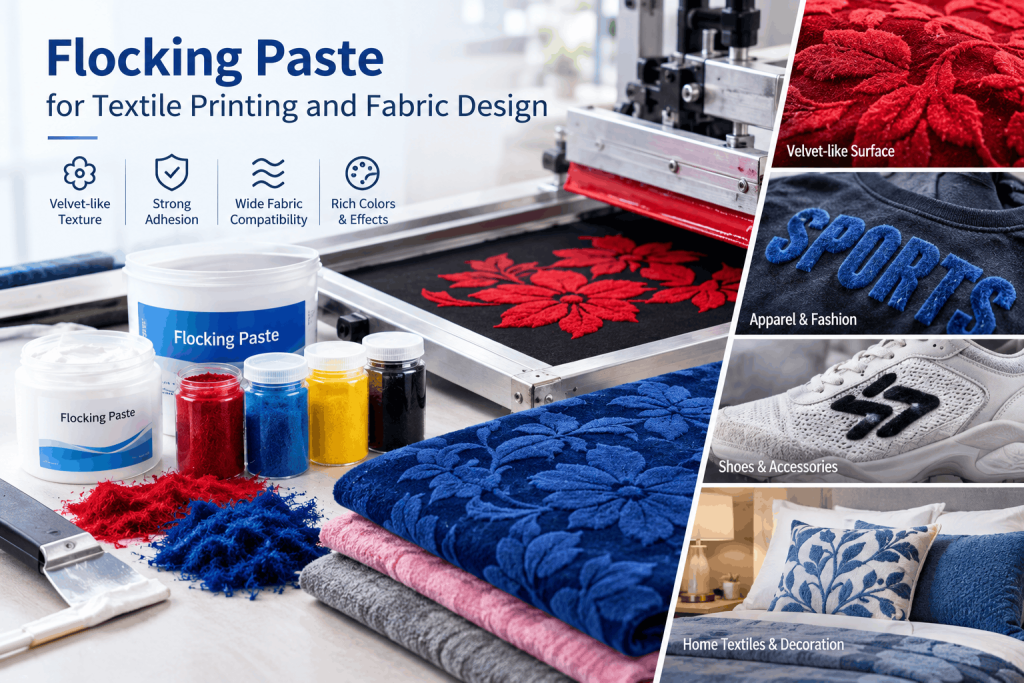
1. What Is Flocking Paste in Textile Printing?
Flocking Paste is a printing material used in processes designed to attach short fibers, known as flock, to a prepared surface. The fibers create a raised texture that can resemble velvet or suede, depending on the fiber type, length, density, and application method.
Unlike conventional flat printing, flocking introduces a tactile element. A design can appear more dimensional and feel different from the surrounding fabric, making the technique useful for decorative graphics, logos, lettering, and selected surface patterns.
In a typical flocking process, the paste is applied to designated areas of the substrate. Flock fibers are then deposited onto the prepared surface using a suitable method. After the required processing and removal of loose fibers, the finished design is evaluated for coverage, texture, adhesion, and appearance.
The exact workflow varies according to the flocking system and the materials involved. Buyers should therefore follow the product-specific instructions provided by their supplier instead of assuming that all flocking pastes use identical processing conditions.
How Flocking Paste Differs from Conventional Printing Paste
Conventional textile printing paste is commonly used to create colored graphics or other surface effects directly on fabric. Flocking Paste serves a different purpose: it supports the attachment of fibers to create a raised, textured finish.
This distinction affects material selection and quality control. A flat printed image may be assessed primarily for color, definition, coverage, and durability. A flocked design also requires attention to fiber distribution, texture uniformity, surface fullness, and fiber retention.
For manufacturers developing premium apparel, accessories, or decorative fabrics, these differences should be reflected in the product specification and sample approval process.
2. Key Benefits of Flocking Paste for Textile Applications
Flocking Paste can support a variety of decorative textile designs. Its value depends on whether the resulting surface meets the appearance, feel, and functional requirements of the finished product.
Creating a Soft, Velvet-Like Surface
One of the most recognizable characteristics of flocking is its soft, raised texture. The fibers provide a different tactile experience from a conventional flat print, allowing designers to introduce contrast within a garment or fabric panel.
This effect can be used for logos, decorative shapes, lettering, and selected design elements. Depending on the fiber and process, the resulting surface may have a short, dense appearance or a more visibly textured finish.
Manufacturers should evaluate the actual flocked sample because fiber length, orientation, color, and density all influence the final effect.
Improving Visual Differentiation
Texture can help a product stand out in a crowded market. A flocked logo or graphic may create a stronger visual contrast against smooth fabric, even when the color palette is relatively simple.
For apparel brands and textile converters, this provides another design option alongside conventional printing, embroidery, and other surface decoration methods.
Flocking can also be combined with other printing techniques when the selected materials and process are compatible. Such combinations require careful testing to confirm that each layer performs as intended.
Supporting Customized Designs
Flocking is suitable for a range of decorative concepts, from simple lettering to more complex patterns. Its practicality depends on the design’s detail, the flocking equipment, the substrate, and the production volume.
Before committing to a large order, manufacturers should evaluate whether fine lines, small characters, and intricate shapes can be reproduced consistently with the selected system.
3. Applications of Flocking Paste Across Different Industries
The usefulness of Flocking Paste extends beyond a single garment category. Different industries can use flocked surfaces to create decorative accents, brand elements, or distinctive fabric finishes.
Garments and Fashion Apparel
Fashion manufacturers may use flocking for logos, lettering, decorative motifs, and selected panels on T-shirts, sweatshirts, jackets, and other apparel.
The intended garment influences the material requirements. For example, a flocked design on a casual sweatshirt may have different comfort and durability priorities from a design on a lightweight or stretch garment.
Buyers should consider how the finished print feels against the skin, how the fabric moves during wear, and how the garment will be cleaned. Where the substrate is elastic, testing should also establish whether the flocked area can accommodate the required movement.
Shoes and Footwear Materials
Flocked effects may be considered for selected footwear materials where a textured decorative surface is desired. Potential uses include branding elements, decorative panels, and other design features.
However, footwear substrates can differ significantly in composition, coating, flexibility, and surface energy. A material that performs well on one fabric or synthetic surface may not be suitable for another.
Before selecting Flocking Paste for shoe applications, confirm compatibility with the actual substrate and assess adhesion, abrasion exposure, flexibility, and the intended production process.
Luggage, Umbrella Fabrics, and Accessories
Bags, luggage accessories, and selected umbrella-related textile components may use decorative surface treatments to differentiate their appearance.
In these applications, the design must be considered alongside the product’s intended use. A decorative flocked panel on an accessory may experience friction, handling, folding, or environmental exposure that differs from ordinary apparel.
Testing should reflect these conditions and the customer’s acceptance criteria. Do not assume that a flocked surface suitable for indoor decorative use will automatically be appropriate for products exposed to more demanding conditions.
Bedding and Decorative Fabrics
Home textiles, cushion covers, curtains, and other decorative fabrics can benefit from textured patterns that add depth to a surface.
For these products, buyers should consider the balance between visual effect, fabric hand feel, cleaning requirements, and repeated handling. Larger production runs may also require particular attention to consistency across fabric rolls and manufacturing batches.
Caigle’s applications page provides an overview of textile uses, including garments, shoes, luggage, umbrellas, bedding, and decorative fabrics.
4. How to Choose the Right Flocking Paste
Selecting Flocking Paste requires a clear understanding of the intended substrate, flock material, production method, and finished-product requirements.
Fabric Compatibility and Adhesion
The substrate is one of the first factors to assess. Cotton, polyester, nylon, blended fabrics, coated textiles, and synthetic footwear materials can behave differently during printing.
Surface treatments, dyes, coatings, and fabric construction may influence how the paste adheres. Buyers should identify the exact substrate and test the material on a representative sample before production approval.
If adhesion is inconsistent, review the entire process rather than immediately attributing the issue to the paste alone. Fabric preparation, application conditions, flock deposition, and curing can all contribute to the result.
Fiber Type and Desired Texture
Flock fibers differ in material, length, thickness, color, and other characteristics. These properties influence the finished surface’s appearance and feel.
The selected Flocking Paste must work with the intended flock and application method. Buyers should confirm the compatibility of the complete material system rather than evaluating the paste independently.
During sampling, compare fiber coverage, surface uniformity, texture, and the clarity of the design edges. These observations help determine whether the selected system can meet the product specification.
Processing Requirements
Application methods and processing conditions vary between flocking systems. Factors such as the printing setup, adhesive layer, fiber application, drying, curing, and removal of loose fibers may influence the final outcome.
Ask the supplier for the relevant technical instructions and follow the recommended process for the specific product. Do not transfer settings from another paste without confirming compatibility.
For production facilities, recording the approved process can help reduce unnecessary adjustments and support repeatability.
Finished-Product Requirements
A suitable flocked surface must meet the expectations of its final application. Relevant criteria may include adhesion, resistance to handling, flexibility, texture consistency, washing performance, or abrasion resistance.
Not every application requires the same test. A decorative fabric for occasional indoor use may have different requirements from a frequently washed garment or a footwear component subject to friction.
Define the important performance criteria before choosing a material. This makes supplier comparisons more objective and reduces the risk of approving a sample that looks attractive but does not meet end-use requirements.
5. Flocking Paste Quality Control: Testing Before Bulk Production
A structured testing process helps manufacturers identify potential problems before a material enters regular production.
Step 1: Prepare a representative substrate. Use the actual fabric or material, including any existing coating or surface treatment.
Step 2: Confirm the complete flocking system. Identify the paste, flock fibers, application equipment, and required processing steps. Check compatibility with the supplier before proceeding.
Step 3: Produce a sample using the intended workflow. Reproduce the planned printing and flocking process as closely as practical.
Step 4: Inspect the appearance. Evaluate fiber distribution, coverage, design definition, texture, and any visible defects. Compare the sample with the agreed reference.
Step 5: Conduct application-specific tests. Depending on the final product, these may include adhesion checks, rubbing or abrasion tests, washing assessments, and flexibility evaluations.
Step 6: Record and approve the results. Document the material identification, substrate, processing conditions, inspection findings, and acceptance criteria.
This process creates a clear reference for future production. If a problem occurs, recorded information can help determine whether the cause relates to the substrate, the materials, the equipment, or the processing conditions.
For overseas buyers, sample approval is particularly valuable because it establishes expectations before bulk orders are shipped.
6. Choosing a Flocking Paste Supplier for B2B Cooperation
For importers, wholesalers, printing factories, and textile manufacturers, supplier selection should consider more than product availability.
Technical Support and Product Information
A supplier should be able to provide relevant information about product use, substrate compatibility, processing conditions, and recommended evaluation methods.
When requesting a quotation, explain the application, fabric type, desired texture, flock material, production process, and estimated order quantity. Clear information helps the supplier determine whether it can support the project.
Quality Management and Batch Consistency
Consistency matters when a manufacturer needs to reproduce the same texture across multiple production runs. Buyers should ask about relevant quality-control procedures and how product identification or batch information is managed.
Where appropriate, establish an approved sample and documented acceptance criteria. Any proposed product substitution should be reviewed before it is introduced into an established workflow.
Supply Planning and Documentation
Commercial requirements include lead times, order quantities, packaging, shipment arrangements, and the supplier’s ability to support repeat orders.
Buyers should also identify documentation requirements for their destination markets and customers. Ask which technical documents, safety information, test reports, or certifications are available for the exact product, and verify that they meet the intended requirements.
Clear communication at the quotation stage can prevent misunderstandings later in the purchasing process.
7. Exploring Flocking Paste Solutions from Caigle
Caigle provides textile printing materials and related solutions for industrial applications. Its official textile printing applications page specifically references flocking among the specialized surface effects used to create distinctive textile designs.
For printing factories, garment manufacturers, footwear producers, and international textile chemical distributors, this provides a relevant starting point for discussing decorative printing requirements.
When contacting Caigle about Flocking Paste, share details about your substrate, flock fibers, desired surface effect, printing method, production volume, and end-use requirements. These details help establish whether a proposed product is appropriate for sample evaluation.
You can also browse the Caigle product center to explore its broader textile printing material categories. Product selection should always be based on the specific product information and technical guidance available for your application.
A well-defined inquiry, followed by sample testing, can help buyers compare options and establish realistic quality expectations before placing a bulk order.
Conclusion
Flocking Paste offers textile manufacturers a way to create raised, velvet-like surface effects that add texture and visual distinction to printed products. Its applications can include garments, footwear materials, accessories, luggage fabrics, and decorative textiles, provided the materials and process are suitable for the intended use.
Choosing the right solution requires attention to substrate compatibility, flock characteristics, adhesion, processing conditions, and finished-product performance. Sample testing and documented acceptance criteria help manufacturers evaluate these factors before committing to large-scale production.
For textile printing factories, importers, wholesalers, and fabric coating processors, a reliable sourcing process begins with clear technical requirements and effective communication with the supplier.
Looking for Flocking Paste for your textile printing or decorative fabric project? Contact Caigle to discuss your substrate, desired flocked effect, production process, and B2B purchasing needs. Visit the official Caigle website to explore its product range and start a conversation about your application.
FAQ: Flocking Paste
1. What is Flocking Paste used for?
Flocking Paste is used in textile printing processes that attach short fibers to a prepared surface, creating a raised or velvet-like finish. The final result depends on the materials and application method.
2. Which industries use Flocking Paste?
Potential applications include garment printing, fashion apparel, footwear materials, accessories, luggage-related fabrics, and decorative textiles. Suitability must be confirmed for each substrate and end use.
3. Can Flocking Paste be used on different fabrics?
Different flocking systems may be compatible with different fabrics, including selected natural, synthetic, blended, and coated materials. Testing is necessary because surface treatments and fabric construction can affect adhesion.
4. How do I evaluate Flocking Paste quality?
Assess fiber coverage, texture uniformity, adhesion, design definition, and the durability characteristics relevant to the finished product. Use agreed test methods and compare results with an approved sample.
5. What should I provide when requesting a quotation?
Share the substrate, flock type, desired surface effect, printing method, end-use requirements, expected order quantity, destination market, and any relevant documentation requirements.
6. How can I contact Caigle about Flocking Paste?
Visit Caigle’s official website to explore its textile printing materials and contact the company with your application details and purchasing requirements.