
Choosing suitable printing materials is one of the most important decisions in textile manufacturing. Different fabrics have different surface structures, absorption characteristics, elasticity, and processing requirements. A printing material that works well on cotton may not produce the same result on polyester, nylon, or blended fabrics. For this reason, manufacturers need a systematic approach to material evaluation before starting production.
This Textile Printing Material Selection Guide is designed for screen printing factories, digital textile printing companies, garment manufacturers, footwear producers, fabric coating processors, and overseas textile chemical distributors. It explains how fabric characteristics influence material selection, how different printing processes affect product requirements, and which performance factors should be evaluated before purchasing.
Whether you produce garments, sportswear, shoes, bags, umbrellas, bedding, or decorative fabrics, understanding the relationship between fabric type and printing material can help reduce production problems and improve finished-product consistency.
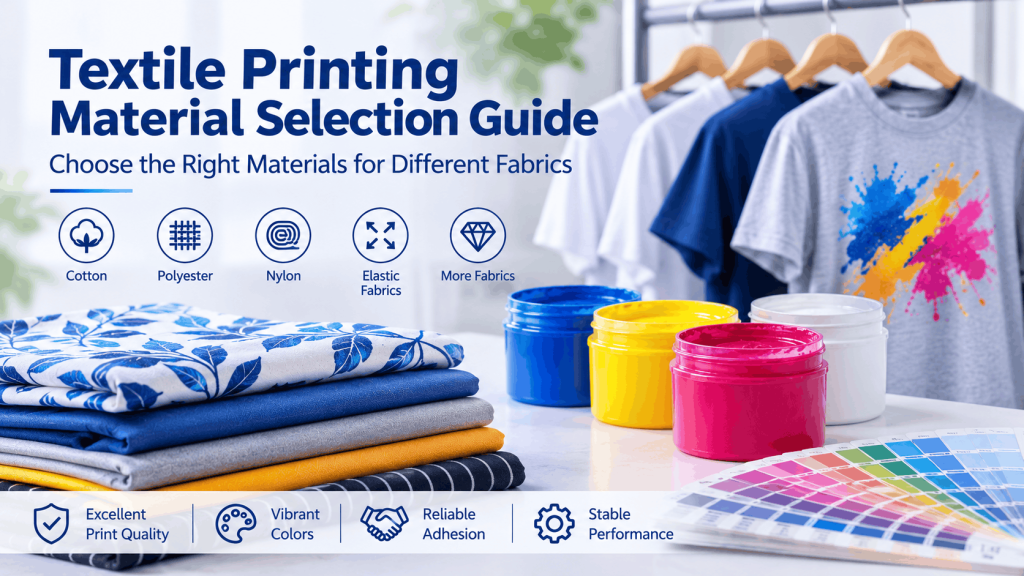
Why You Need a Textile Printing Material Selection Guide
Textile printing materials interact directly with the fabric surface. Their compatibility influences print appearance, adhesion, color performance, flexibility, and the hand feel of the finished product.
Selecting an unsuitable material may lead to several common problems:
- Poor adhesion between the printed layer and the fabric.
- Uneven color coverage or inconsistent printing effects.
- Cracking when printed fabrics are stretched or bent.
- A hard or uncomfortable surface feel.
- Inconsistent results between sample testing and mass production.
- Additional material waste and production adjustments.
For manufacturers supplying international brands, these issues can affect product quality, delivery schedules, and customer satisfaction.
A practical Textile Printing Material Selection Guide should therefore begin with the actual application rather than a general product description. Buyers need to understand the fabric, printing process, intended decorative effect, and performance requirements before deciding which material category to evaluate.
The goal is not simply to find a material that can be printed onto a fabric. It is to identify a suitable material system that can deliver the required result under realistic production conditions.
Textile Printing Material Selection by Fabric Type
Fabric composition is one of the first factors to consider when choosing printing materials. Cotton, polyester, nylon, elastic fabrics, and specialty textiles have different characteristics that influence printing performance.
1. Cotton Fabric Printing Materials
Cotton is widely used in T-shirts, casual clothing, promotional garments, bedding, and home textiles. Its absorbent structure makes it a common substrate for different textile printing applications.
When selecting cotton printing materials, manufacturers should consider:
- Compatibility with the cotton fabric and selected printing process.
- Desired print coverage and color appearance.
- Required surface softness and flexibility.
- Adhesion and washing performance.
- Whether the finished print meets the customer’s expectations.
Water-based printing paste is one material category that can be evaluated for suitable cotton applications. Different formulations may be designed for different effects, so buyers should confirm the intended use of each product.
For example, a garment manufacturer may prioritize a comfortable hand feel, while a promotional textile producer may place greater emphasis on color appearance and repeatability.
Caigle provides information about its Water-Based Textile Printing Paste, which buyers can explore when evaluating materials for garment and fabric printing.
2. Polyester Fabric Printing Materials
Polyester is commonly used in sportswear, fashion garments, bags, outdoor textiles, and functional fabrics. Compared with cotton, polyester has different dye and surface characteristics, which can affect the printing process.
One important consideration is dye migration. Under certain heating conditions, dyes in synthetic fabrics may move into the printed layer and change the appearance of the design.
When following this Textile Printing Material Selection Guide for polyester, buyers should evaluate:
- Compatibility between the printing material and polyester substrate.
- Potential dye migration during processing.
- Required color coverage and print definition.
- Flexibility for sportswear and stretch fabrics.
- Durability under the intended product conditions.
Specialized anti-sublimation materials may be worth evaluating when dye migration is a concern. However, the appropriate material depends on the fabric color, dye system, printing structure, and processing conditions.
Manufacturers should conduct sample tests using the actual polyester fabric rather than relying only on general material descriptions.
3. Nylon Fabric Printing Materials
Nylon is widely used in jackets, sportswear, footwear components, luggage, umbrellas, and outdoor accessories. Its surface characteristics and existing treatments can influence the adhesion of printing materials.
Important selection factors include:
- Adhesion to the specific nylon substrate.
- Compatibility with waterproof or other surface treatments.
- Flexibility during repeated bending and stretching.
- Required print definition and coverage.
- Resistance to the expected handling and usage conditions.
Not all nylon fabrics behave in the same way. Woven nylon, knitted nylon, coated nylon, and nylon-spandex blends may require different material evaluations.
Silicone-based printing materials may be considered for selected nylon and elastic textile applications. Buyers can explore Caigle’s Silicone Series for further information about related printing applications.
4. Elastic and Blended Fabric Printing Materials
Elastic fabrics are common in sportswear, swimwear, leggings, fitted garments, and performance clothing. These fabrics may contain spandex blended with nylon, polyester, or other fibers.
Their stretching and recovery characteristics create additional demands on printed layers. A material that looks satisfactory on an unstretched sample may crack or lose its appearance when the fabric is extended.
A Textile Printing Material Selection Guide for elastic fabrics should focus on:
- Whether the printed layer can accommodate the required fabric extension.
- Whether adhesion remains stable during repeated movement.
- Whether the finished surface maintains the desired hand feel.
- Whether printing affects the original fabric flexibility.
- Whether the print meets the required durability standards.
Silicone printing materials may be suitable for evaluating certain elastic fabric applications, depending on the specific formulation and process. Always test the complete printing system on the actual fabric before bulk production.
5. Specialty and Decorative Fabric Materials
Decorative fabrics, bedding textiles, luggage materials, umbrella fabrics, and footwear components cover a wide range of constructions and surface treatments.
In these applications, fiber composition alone is not enough to determine material compatibility. Fabric texture, thickness, surface coating, and final product usage must also be considered.
For example, decorative bedding may prioritize appearance and a comfortable surface feel, while luggage materials may require more attention to friction and repeated handling.
Providing the supplier with a representative fabric sample is an effective way to improve material evaluation and avoid unsuitable product recommendations.
Textile Printing Material Selection by Printing Process
Fabric type is only one part of material selection. The printing method also influences the required material characteristics. Screen printing, digital textile printing, and surface coating involve different workflows and application requirements.
Screen Printing Materials
Screen printing remains widely used for garment graphics, logos, decorative patterns, footwear components, and other textile applications.
When selecting screen printing materials, manufacturers should evaluate:
- Screen mesh and required design detail.
- Material viscosity and application characteristics.
- Desired print thickness and coverage.
- Fabric compatibility.
- Drying and curing requirements.
- Production speed and repeatability.
Different printing effects may require different paste categories, including water-based printing paste, nylon paste, special-effect paste, and silicone-based materials.
Caigle’s Paste Series includes different material categories for textile printing applications. Buyers should review individual product information and confirm suitability for their intended fabric and process.
Digital Textile Printing Materials
Digital textile printing supports detailed graphics, customized patterns, and flexible production requirements. However, print quality depends on more than the printer or ink alone.
The interaction between fabric, pretreatment, ink, coating materials, and printing equipment can influence the final result.
When using this Textile Printing Material Selection Guide for digital printing applications, consider:
- Fabric compatibility: Confirm that the material is suitable for the intended fabric.
- Printing technology: Different digital printing systems may require different ink and pretreatment combinations.
- Equipment compatibility: Review technical guidance for the printer and printhead.
- Image quality: Evaluate color appearance, definition, and consistency.
- Production requirements: Consider workflow, order volume, and processing conditions.
Caigle’s Digital Textile Printing Ink Solutions provides further information about digital printing materials.
Textile Coating and Surface Finishing Materials
Some textile applications require more than a printed pattern. They may also need a specific surface appearance, texture, or finishing effect.
In these cases, coating and top-coating materials can form part of the production process. Buyers should evaluate how the finishing material interacts with the underlying print and fabric.
For example, matte and glossy coatings produce different visual effects. The correct option depends on product design, surface feel, and intended application.
Manufacturers should assess the complete printing and finishing system instead of evaluating each material layer independently.
How to Evaluate Textile Printing Material Performance
After identifying a potentially suitable product, manufacturers should establish clear evaluation criteria. This step is essential for comparing materials and ensuring that the selected product meets actual production requirements.
Adhesion and Durability
Adhesion determines how well a printed or coated layer remains attached to the fabric. The required performance depends on the final product and its intended usage.
Relevant tests may include washing, rubbing, bending, or other application-specific evaluations. Buyers should agree on test methods and acceptance criteria before comparing samples.
Color Appearance and Print Definition
Color consistency is important for manufacturers producing repeat orders for brands and distributors. Evaluate the finished print under consistent lighting conditions and compare it with an approved reference sample.
For detailed graphics, check whether the selected printing material and process can reproduce the required lines, edges, and patterns.
Hand Feel and Flexibility
The finished textile should retain the characteristics required for its intended application. Garments may require a comfortable surface feel, while elastic sportswear needs a printing layer that can accommodate fabric movement.
Compare printed samples with the original fabric and evaluate their condition after relevant durability tests.
Production Stability
A material that performs well during small-scale testing may behave differently during continuous production.
Manufacturers should check whether the printing process can maintain consistent application, appearance, and processing results over a representative production run.
Documenting material identification, processing conditions, and inspection results can help improve repeatability and support future orders.
Common Mistakes in Textile Printing Material Selection
Even experienced manufacturers can encounter material problems when purchasing decisions are based on incomplete information.
Choosing materials based only on price: A lower purchase price does not necessarily mean lower total production costs. Consider material consumption, defect rates, process adjustments, and finished-product quality.
Using one material for every fabric: Cotton, polyester, nylon, and elastic blends have different characteristics. A material should be evaluated for its intended substrate.
Ignoring the complete printing process: Fabric preparation, printing equipment, application conditions, drying, curing, and finishing can all affect the final result.
Skipping sample testing: Product descriptions cannot replace practical trials. Testing helps identify compatibility issues before large orders are placed.
Failing to define acceptance standards: Terms such as soft, flexible, durable, or matte can mean different things to different customers. Use reference samples and agreed evaluation methods.
Following a consistent Textile Printing Material Selection Guide helps purchasing teams reduce these risks and communicate more effectively with technical departments and suppliers.
How to Choose a Reliable Textile Printing Material Supplier
For overseas importers, wholesalers, distributors, and manufacturing companies, supplier evaluation is another important part of material sourcing.
A reliable supplier should be able to explain the intended applications of its products and understand the technical information required for a particular project.
Before placing an order, consider:
- Product range: Does the supplier offer different categories for your printing applications?
- Technical communication: Can the supplier understand your fabric, process, and required finish?
- Sample support: Can materials be evaluated before commercial production?
- Quality management: Are product identification and quality-control procedures clearly explained?
- Supply arrangements: Can the supplier discuss quantities, packaging, lead times, and repeat orders?
- After-sales support: Is there a clear communication channel for technical questions?
Caigle supplies textile printing materials across several categories, including Paste Series, Digital Coating Ink Series, Silicone Series, and Shoe Materials Series. These categories serve different textile printing and finishing applications, including garments, shoes, luggage, umbrellas, bedding, and decorative fabrics.
For buyers handling multiple fabric types, Caigle’s product range provides a starting point for discussing different material requirements with one supplier. The appropriate product should still be confirmed according to the actual substrate, process, and finished-product requirements.
FAQ About the Textile Printing Material Selection Guide
1. What is a Textile Printing Material Selection Guide?
A Textile Printing Material Selection Guide explains how to evaluate printing materials according to fabric type, printing method, desired finish, and final product requirements. It helps manufacturers make more informed material purchasing decisions.
2. How do I choose printing materials for different fabrics?
Start by identifying the fabric composition and surface characteristics. Then consider the printing method, required appearance, adhesion, flexibility, and durability. Conduct sample testing before mass production.
3. Can one printing material be used for cotton, polyester, and nylon?
Not necessarily. Different fabrics have different surface and processing characteristics. Some products may be suitable for multiple substrates, but compatibility must be confirmed through product information and practical testing.
4. What is the difference between screen printing paste and digital printing ink?
Screen printing paste is developed for suitable screen printing processes, while digital printing ink is designed for compatible digital printing systems. Their application requirements and equipment compatibility are different.
5. Why is sample testing important before bulk purchasing?
Sample testing helps manufacturers evaluate adhesion, color appearance, hand feel, flexibility, and process compatibility. It also reduces the risk of discovering material problems after production has started.
6. What information should I provide when requesting a quotation?
Provide the fabric type, printing method, intended application, desired finish, estimated order quantity, and relevant performance requirements. Fabric samples and reference images can also help suppliers understand the project.
7. Does Caigle offer different textile printing material categories?
Caigle’s website presents several categories, including Paste Series, Digital Coating Ink Series, Silicone Series, and Shoe Materials Series. Buyers can explore the available information and contact Caigle to discuss specific application requirements.
Conclusion
Choosing suitable textile printing materials requires an understanding of fabric characteristics, printing methods, finished-product requirements, and production conditions. Cotton, polyester, nylon, elastic fabrics, and specialty textiles should not automatically be treated as interchangeable substrates.
For screen printing factories, digital printing companies, garment manufacturers, footwear producers, and fabric coating processors, a systematic selection process can help reduce compatibility problems and improve production consistency.
This Textile Printing Material Selection Guide highlights the importance of identifying the actual application, comparing suitable material categories, conducting practical sample testing, and establishing clear quality standards before bulk purchasing.
Caigle provides different textile printing material categories for manufacturers and international buyers exploring printing and finishing solutions. Contact Caigle through its official website to share your fabric requirements, discuss your printing process, and explore suitable material options for your next production project.