
Creating a soft, dimensional surface can give printed textiles a distinctive appearance and tactile feel. Suede Foaming Paste is designed for textile printing applications where manufacturers need a raised, soft-touch effect with a suede-like surface.
Unlike conventional flat printing pastes, foaming formulations can create additional surface volume after the appropriate curing or heating process. This makes them suitable for garments and fabrics that require both visual texture and a noticeable hand feel.
For textile printing manufacturers, garment factories, and printing service providers, selecting the right paste is important for maintaining consistent printing quality across different fabrics and production conditions.
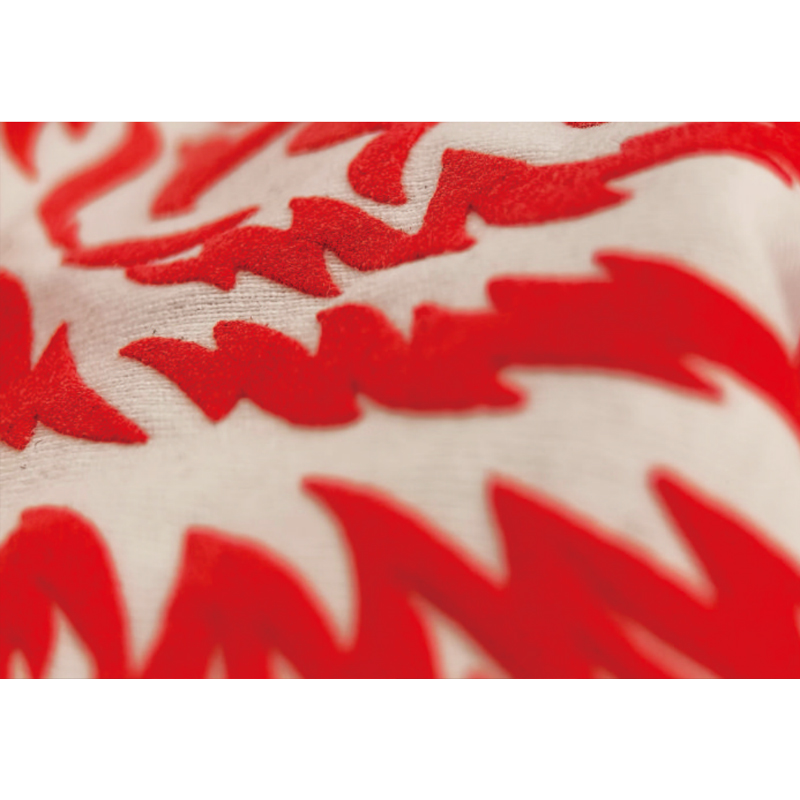
What Is Suede Foaming Paste?
Suede Foaming Paste is a specialized textile printing material used to create a soft, raised and suede-like surface on fabrics. During the printing and curing process, the paste develops a three-dimensional effect, giving the printed area greater depth than a conventional screen print.
The resulting surface can provide a smooth and soft tactile sensation while adding visual depth to patterns, logos, letters and decorative graphics.
Depending on the formulation and production process, the material can be used on different textile substrates and incorporated into various garment printing designs.
How Does the Foaming Effect Work?
The foaming effect is produced through controlled expansion during the heating or curing stage. After the paste is applied to the fabric, the printed layer is processed under suitable temperature and time conditions.
As the material expands, the printed area becomes raised from the fabric surface. Proper control of printing thickness, mesh selection, drying and curing conditions helps achieve a more uniform texture.
This process allows printers to create a dimensional surface without relying entirely on mechanical embossing or additional fabric processing.
Key Features of Suede Foaming Paste
A well-formulated Suede Foaming Paste can provide several useful characteristics for textile printing production.
Soft Suede-Like Hand Feel
One of the main purposes of this type of printing paste is to create a soft surface. The finished print can provide a textile-like tactile experience that is different from traditional smooth ink layers.
This makes it suitable for apparel designs where the hand feel of the printed area is an important part of the final product.
Raised Three-Dimensional Effect
The foaming process increases the height of the printed layer and creates a noticeable raised effect. Depending on the design and printing parameters, manufacturers can adjust the visual depth of the finished pattern.
The dimensional effect can be particularly useful for fashion graphics, decorative logos and textured garment designs.
Suitable for Decorative Applications
Textile printing often requires more than simply reproducing an image. Designers may want to introduce texture, contrast and depth to make a garment visually distinctive.
A suede-effect printing paste can be used to create decorative elements on T-shirts, sweatshirts, sportswear, fashion garments and other textile products.
Compatibility With Screen Printing Processes
For many textile printing operations, production efficiency is an important consideration. Screen printing remains widely used for garment decoration because it is suitable for repeat production and different pattern sizes.
A suitable foaming paste can be incorporated into existing screen printing workflows, subject to the recommended printing and curing parameters.
Applications of Suede Foaming Paste
The application range depends on the specific formulation, fabric type and required finishing effect. Common applications include apparel and textile decoration.
T-Shirt and Sweatshirt Printing
Cotton T-shirts, sweatshirts and casual garments are common applications for raised textile printing. A soft raised layer can add texture to simple graphics and lettering.
For fashion brands and garment manufacturers, this type of effect can help create differentiated designs without changing the underlying fabric construction.
Fashion Garments
Fashion products often use different surface effects to create visual and tactile contrast. Suede-like printing can be combined with flat printing, high-density printing or other decorative techniques.
This allows designers to develop layered patterns with different textures within a single garment.
Sportswear and Casualwear
Sportswear and casualwear may use textured logos, numbers, lettering and decorative graphics. The appropriate printing formulation can help create raised details while maintaining a comfortable surface feel.
Before mass production, printers should evaluate the interaction between the printing material and the selected fabric.
Decorative Textile Products
Beyond garments, raised printing effects can also be considered for selected textile accessories and decorative fabric products. The final application should be evaluated according to fabric construction, washing requirements and the desired surface effect.
Factors to Consider During Printing
Using Suede Foaming Paste effectively requires more than simply selecting the material. Printing parameters can have a significant influence on the final appearance.
Fabric Selection
Different fabrics have different surface structures, absorbency and heat resistance. Cotton, polyester blends and other textile substrates may respond differently during printing and curing.
Testing the paste on the actual production fabric is recommended before starting large-volume production.
Screen and Mesh Selection
Screen specifications influence the amount of paste deposited onto the fabric. Because a raised effect depends on sufficient material thickness, mesh selection should match the desired surface height and pattern details.
Very fine graphic elements may also require different screen parameters from large solid areas.
Printing Thickness
The thickness of the printed layer directly affects the final texture. A thinner layer may produce a more subtle effect, while a thicker deposit can create greater surface volume.
However, increasing the amount of material does not automatically produce a better result. Excessive thickness may affect detail reproduction, drying and curing performance.
Heating and Curing
Temperature, heating time and equipment conditions should be controlled according to the technical recommendations for the specific product.
Consistent curing is particularly important for achieving stable surface characteristics and wash performance. Production parameters should therefore be validated through sample testing.
Combining Suede Effects With Other Textile Printing Techniques
Modern garment printing frequently uses multiple materials to create contrasting textures.
A suede-effect layer can be combined with conventional textile printing pastes to create a mixture of flat and raised areas. Designers can also use different colors or printing layers to emphasize the dimensional effect.
For example, a garment may feature a flat background graphic with selected letters or decorative elements printed with a raised suede-like finish.
This approach provides greater flexibility for fashion and apparel manufacturers looking to create textured designs.
Quality Control for Textile Printing
Consistent quality is important when using specialty printing materials in commercial production. Several aspects should be checked during sample development and mass production.
Printers can evaluate:
- Surface softness and tactile feel
- Height and uniformity of the raised effect
- Color consistency
- Pattern definition
- Adhesion to the selected fabric
- Washing and rubbing performance
- Curing consistency
- Compatibility with the production equipment
These tests can help identify potential issues before large-scale manufacturing begins.
Why Choose a Professional Textile Printing Paste Supplier?
Special-effect printing materials require suitable formulation, application knowledge and technical support. A professional supplier can provide product information and application guidance based on the intended fabric and printing process.
For B2B textile manufacturers, stable product quality is also important when the same design needs to be reproduced across multiple production batches.
Caigle focuses on textile printing materials for professional applications, including water-based printing paste, digital textile printing ink, silicone printing materials and shoe printing materials. Its product range is developed for different textile printing requirements and production processes.
For businesses looking for a suitable Suede Foaming Paste, product selection should be based on the fabric, printing method, desired surface effect and curing conditions.
Conclusion
Suede Foaming Paste provides textile printers with a practical way to introduce soft, raised and suede-like textures to fabric surfaces. Its three-dimensional effect can be used for apparel graphics, fashion garments, casualwear, sportswear and other decorative textile applications.
The final result depends on several factors, including fabric type, screen selection, printing thickness and curing conditions. Careful testing and process control can help manufacturers achieve a consistent surface effect during production.
For textile printing companies and garment manufacturers, choosing a printing material that matches the intended application is an important part of developing reliable and visually distinctive textile products.