
Textile printing quality has a direct influence on the appearance, durability, and commercial value of finished products. For screen printing factories, digital textile printing companies, garment manufacturers, footwear producers, and fabric coating processors, even small variations in color, adhesion, or surface feel can result in customer complaints and additional production costs.
A reliable Textile Printing Quality Control process helps manufacturers identify problems before they affect large quantities of fabric or finished garments. It also creates a consistent production standard that purchasing teams, operators, quality inspectors, and customers can follow.
However, print quality is not determined by printing materials alone. Fabric characteristics, pretreatment, printing equipment, application conditions, drying, curing, and storage can all influence the final result.
This guide explains how to establish a practical textile printing inspection process, identify common printing defects, evaluate material performance, and improve production consistency.
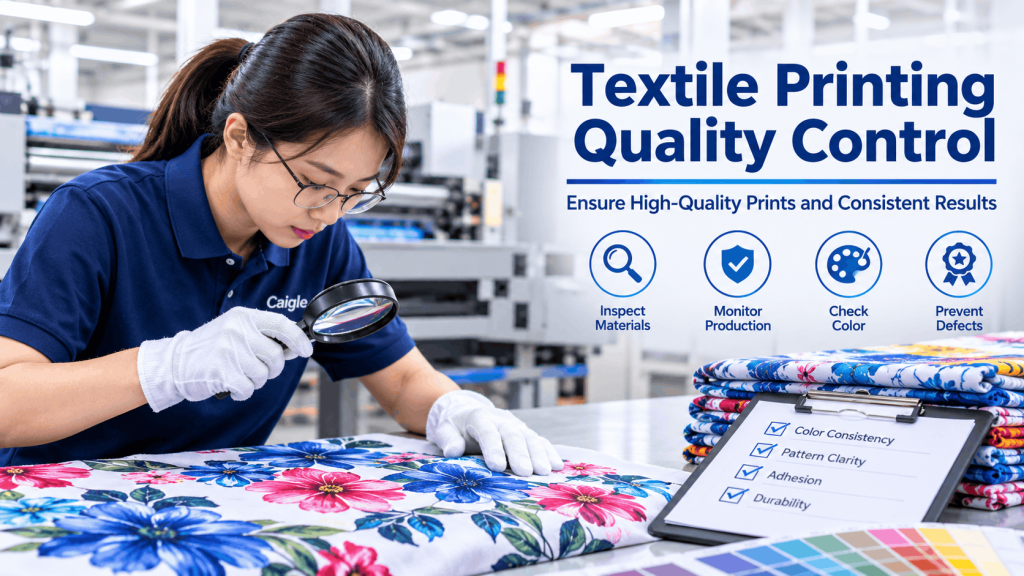
Why Textile Printing Quality Control Matters
Textile printing involves several connected production stages. A problem in an early stage may become more noticeable after printing, drying, washing, or finishing.
Without a clear inspection procedure, manufacturers may discover defects only after a large production batch has been completed. This can increase material waste, rework, delivery pressure, and quality disputes.
An effective Textile Printing Quality Control system can help businesses:
- Maintain consistent print appearance across production batches.
- Identify material and process problems at an early stage.
- Reduce defects caused by unsuitable fabric or printing conditions.
- Improve communication between production and quality teams.
- Meet customer requirements for appearance and durability.
- Support more reliable repeat orders.
For international suppliers and garment manufacturers, consistent quality is particularly important because buyers may compare samples, bulk production, and repeat orders under strict acceptance requirements.
Quality control should therefore be treated as part of the complete manufacturing workflow rather than a final inspection performed after production.
Key Inspection Points in Textile Printing Quality Control
1. Fabric and Raw Material Inspection
Before printing begins, manufacturers should check the condition of the incoming fabric and printing materials.
Fabric differences can influence ink absorption, paste application, color appearance, and adhesion. Even fabrics with similar fiber compositions may behave differently because of variations in surface treatments, construction, or finishing.
Important inspection points include:
- Fabric composition and construction.
- Surface cleanliness and visible contamination.
- Fabric color and appearance.
- Surface treatments or coatings.
- Printing material identification and storage condition.
- Compatibility between the selected material and substrate.
Printing materials should also be checked against purchasing records and supplier documentation. Product identification, batch information, and storage instructions help ensure that the correct material is used.
A consistent incoming inspection procedure can prevent unsuitable materials from entering production.
2. Pretreatment and Fabric Preparation
Fabric preparation is an important part of textile printing quality. Dust, loose fibers, oil, moisture, or uneven pretreatment may affect printing results.
For digital textile printing, pretreatment can influence how ink interacts with the fabric and how the final image develops. For screen printing, substrate preparation may affect the consistency of the printed layer.
Quality teams should check whether the fabric preparation procedure is suitable for the selected printing system.
For DTG applications, Caigle’s DTG Ink for Direct to Garment Textile Printing article discusses fabric preparation, pretreatment, printing, curing, and final inspection as connected stages of the production workflow.
3. Printing Process Inspection
During printing, operators should monitor the application process rather than waiting until the finished product is available.
For screen printing, relevant inspection points may include screen condition, alignment, material application, print coverage, and consistency between repeated prints.
For digital textile printing, inspection may include nozzle performance, ink delivery, image alignment, printhead condition, and visible printing defects.
The specific inspection procedure should match the equipment and printing technology being used.
4. Drying and Curing Inspection
Drying and curing conditions can influence adhesion, flexibility, surface feel, and durability.
Manufacturers should follow the technical guidance for the selected printing material and verify that the process is suitable for the actual fabric and equipment.
Insufficient or inconsistent processing may contribute to defects such as poor adhesion, tackiness, or unstable print performance. Excessive or unsuitable processing may also affect the fabric or printed layer.
Production teams should document relevant processing conditions and check finished samples rather than relying only on equipment settings.
Common Textile Printing Defects and How to Prevent Them
A practical Textile Printing Quality Control program should include a clear method for identifying defects, investigating their causes, and verifying corrective actions.
1. Uneven Color and Inconsistent Print Appearance
Uneven color may appear as visible differences across the same design or between production batches.
Potential causes include inconsistent material application, fabric variation, unsuitable pretreatment, changes in equipment settings, or differences in processing conditions.
To reduce this problem:
- Use consistent fabric and material specifications.
- Standardize printing and pretreatment procedures.
- Check equipment condition before production.
- Compare samples under consistent lighting.
- Retain approved color and production references.
For digital printing, color management and equipment condition should also be reviewed when investigating color differences.
2. Poor Adhesion and Peeling
Poor adhesion occurs when the printed layer does not remain sufficiently attached to the fabric or underlying layer.
Possible contributing factors include material incompatibility, insufficient fabric preparation, unsuitable application conditions, or processing problems.
Manufacturers should first confirm that the printing material is suitable for the actual substrate. They should then review preparation, application, drying, and curing conditions.
Adhesion should be evaluated using a test method appropriate to the finished product. Washing, rubbing, or other application-specific tests may be relevant.
3. Cracking During Stretching
Cracking is a common concern when printing on elastic fabrics, sportswear, and garments that experience repeated movement.
The issue may be related to the material formulation, print thickness, fabric elasticity, or processing conditions.
Quality teams should evaluate the printed sample under realistic stretching conditions. The material should be selected according to the fabric’s required extension and recovery characteristics.
For certain elastic textile applications, silicone-based printing materials may be worth evaluating. Caigle’s Silicone Series provides further information about this material category.
4. Blurred Patterns and Poor Print Definition
Blurred edges, missing details, or unclear patterns can reduce the visual quality of finished textiles.
In screen printing, possible causes include screen condition, material application, alignment, and unsuitable printing parameters.
In digital printing, possible causes include nozzle problems, image preparation, fabric movement, or unsuitable printing settings.
The quality team should inspect both the original artwork and the printing process to determine where the problem occurs.
5. Unwanted Surface Feel
A printed garment may feel too stiff, rough, sticky, or different from the approved sample.
This may result from material selection, excessive application, layer structure, or processing conditions.
The final product should be compared with an approved hand-feel reference. For garments and bedding, comfort may be especially important. For footwear and bags, other surface characteristics may receive greater attention.
Textile Printing Quality Control Tests Before Mass Production
Testing before bulk production helps manufacturers identify potential problems while the quantity of affected material is still limited.
The test plan should be based on the intended application, customer requirements, and material manufacturer’s guidance.
Adhesion Testing
Adhesion testing evaluates whether the printed or coated layer remains attached to the fabric. The selected method should reflect the material structure and product application.
Washing and Rubbing Tests
For garments and other washable textiles, washing performance may be an important acceptance criterion. Rubbing tests can help evaluate whether the printed surface maintains its appearance during handling and use.
The test procedure, conditions, and acceptance level should be agreed upon before production.
Stretching and Flexibility Tests
For sportswear, elastic garments, and functional textiles, stretching tests can help identify cracking, peeling, or other changes in the printed layer.
The test should reflect the expected movement of the finished product.
Color and Appearance Inspection
Color comparison should use consistent lighting and approved reference samples. Inspectors should also check pattern definition, coverage, surface uniformity, and visible defects.
Production Batch Comparison
For repeat orders, retain approved samples and production records. Compare new batches with the established reference to identify unexpected changes in appearance or performance.
Building a Textile Printing Quality Control Workflow
A consistent inspection workflow helps different departments work toward the same quality standards.
Step 1: Define product requirements. Confirm fabric type, printing method, target appearance, durability expectations, and customer acceptance criteria.
Step 2: Inspect incoming materials. Check fabric condition, printing material identification, and relevant supplier documentation.
Step 3: Conduct sample production. Test the complete material and process combination before releasing a bulk order.
Step 4: Approve the reference sample. Purchasing, production, and quality teams should use the same approved sample as a visual and performance reference.
Step 5: Monitor production. Perform checks at appropriate production stages and record any changes or defects.
Step 6: Inspect finished products. Evaluate appearance and application-specific performance before packaging and shipment.
Step 7: Review customer feedback. Record complaints and investigate their causes to improve future production.
This workflow turns Textile Printing Quality Control into a repeatable management process instead of a series of disconnected inspections.
Choosing Printing Materials That Support Consistent Quality
Material selection has a direct influence on print quality. A suitable material should match the fabric, printing process, intended effect, and finished-product requirements.
For example, water-based printing paste may be evaluated for suitable garment and fabric applications, while digital printing inks are designed for compatible digital printing systems. Silicone materials may be considered for selected elastic or functional textile applications.
Caigle’s product portfolio includes Paste Series, Digital Coating Ink Series, Silicone Series, and Shoe Materials Series. Its website also presents application areas including garments, shoes, luggage, umbrellas, bedding, and decorative fabrics.
Buyers can explore Caigle’s official website and its Water-Based Textile Printing Paste information when evaluating materials for their production needs.
When discussing a project with a supplier, provide fabric samples, printing methods, target effects, and required performance tests. This allows the supplier to understand the application and helps both sides establish a practical sample evaluation process.
FAQ About Textile Printing Quality Control
1. What is textile printing quality control?
Textile Printing Quality Control refers to the inspection and management of materials, processes, and finished prints to ensure that products meet defined appearance and performance requirements.
2. What are the most common textile printing defects?
Common defects include uneven color, poor adhesion, peeling, cracking, blurred patterns, inconsistent coverage, and unwanted surface feel. The actual causes depend on the material and production process.
3. Why should printing materials be tested before bulk production?
Sample testing helps verify fabric compatibility, appearance, adhesion, flexibility, and other application-specific requirements before large quantities are processed.
4. How can factories improve print consistency?
Factories can standardize material specifications, fabric preparation, equipment settings, processing conditions, inspection methods, and reference samples. Production records also help identify the causes of recurring defects.
5. Which tests are important for garment printing?
Depending on the product, relevant tests may include washing, rubbing, adhesion, stretching, color appearance, and hand-feel evaluation. The test plan should reflect customer requirements and intended use.
6. Can printing materials affect final product quality?
Yes. Material compatibility and formulation can influence print appearance, adhesion, flexibility, and surface feel. However, equipment, fabric preparation, and processing conditions also play important roles.
Conclusion
Effective Textile Printing Quality Control requires more than checking finished garments for visible defects. It involves managing fabric preparation, printing materials, equipment, application conditions, drying, curing, and final inspection as connected production stages.
By defining clear acceptance criteria, testing materials before bulk production, monitoring critical process points, and retaining approved samples, manufacturers can improve print consistency and reduce avoidable production problems.
For textile printing factories, garment manufacturers, footwear producers, and fabric processors, working with a supplier that understands different printing material categories can also support better material evaluation.
Contact Caigle through its official website to discuss your fabric type, printing process, and material requirements. Share your application details to explore suitable textile printing materials for your production and quality objectives.