
Direct to Garment printing provides textile manufacturers with a digital method for printing graphics directly onto garments. Instead of transferring an image from a separate film, the printing equipment deposits ink directly onto the textile surface. This makes DTG Ink an important part of the digital garment printing process.
DTG technology is commonly considered for detailed graphics, photographs, gradients, customized apparel and designs that require direct digital reproduction.
For professional printing businesses, the quality of the finished garment depends on more than the ink itself. Fabric preparation, garment surface, printer settings, pretreatment, printhead condition, drying and curing all influence the final result.
Caigle lists DTG Ink within its Digital Coating Ink Series, alongside DTF Ink, DTC Ink and DTP Ink. The same digital product system also includes pretreatment and coating materials for different digital textile printing processes.
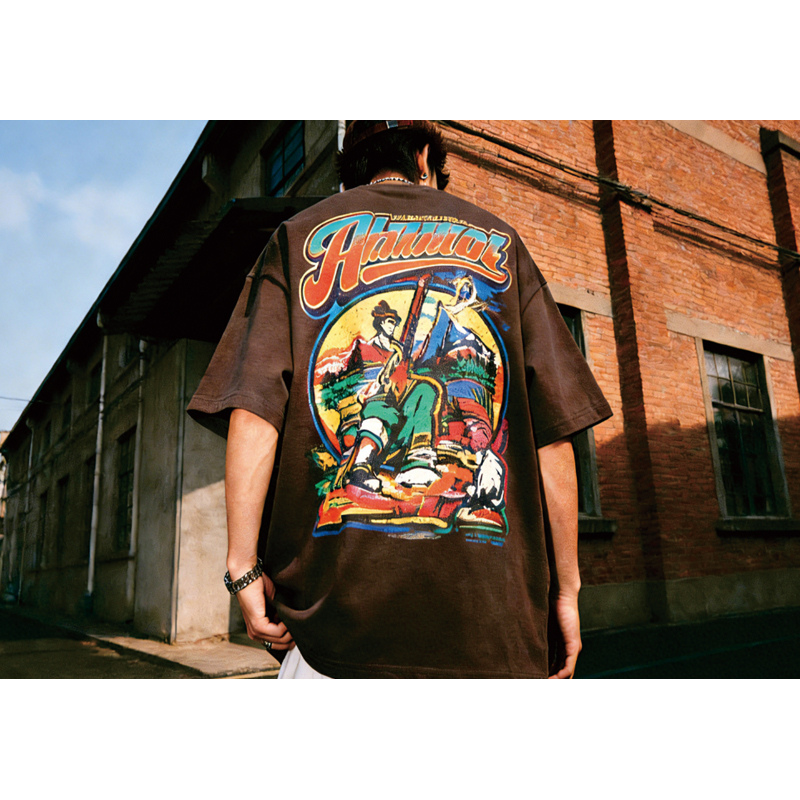
What Is DTG Ink?
DTG Ink is a digital printing ink formulated for Direct to Garment printing applications.
During DTG production, the garment is positioned directly on the printer platen. The printer then applies the digital image to the textile surface according to the selected color profile and printing parameters.
The process can reproduce complex artwork without requiring traditional screens.
This makes DTG particularly useful for customized garments and products where each piece may contain a different design.
How Does DTG Printing Work?
A typical DTG workflow includes several stages:
- Garment preparation
- Fabric pretreatment when required
- Drying or heat treatment
- Digital image preparation
- Inkjet printing
- Drying and curing
- Final quality inspection
Each stage influences the final result.
A high-quality DTG Ink cannot compensate for unsuitable pretreatment, poor fabric preparation or incorrect curing. The entire production process should therefore be optimized as one system.
Why Is DTG Ink Important?
The ink determines how digital artwork is reproduced on the fabric.
Important characteristics can include:
- Color reproduction
- Print sharpness
- Ink absorption
- Surface appearance
- Compatibility with the textile
- White ink performance
- Wash performance
The specific requirements depend on the printer, fabric and final garment.
Main Applications of DTG Ink
Cotton T-Shirts
Cotton T-shirts are widely associated with direct garment printing.
The fabric can provide a suitable surface for digital graphics, although different cotton constructions may produce different results.
Before production, printers should evaluate the fabric surface, pretreatment and curing conditions.
Fashion Apparel
Fashion manufacturers may use digital garment printing for artwork that contains photographs, gradients or complex color transitions.
Because artwork can be changed digitally, DTG production can support collections containing multiple designs.
Personalized Clothing
One of the advantages of digital garment printing is the ability to produce variable artwork.
Names, illustrations, photographs and customized graphics can be changed from one garment to another without creating a new screen.
Promotional Apparel
Businesses and organizations may require customized T-shirts, event clothing and promotional garments.
DTG printing can be considered when designs vary between garments or when production quantities are relatively flexible.
The Role of Pretreatment in DTG Printing
Pretreatment can have a significant influence on the final appearance of a digital garment print.
It can affect how the ink interacts with the fabric and how the printed image develops during curing.
Caigle’s Digital Paste Series includes a Digital Pretreatment Solution, as well as Digital Top Coating Paste and Ink-absorbing Paste, showing that digital textile production can involve multiple supporting materials in addition to ink.
Pretreatment Uniformity
Uneven pretreatment can result in differences in color and surface appearance across the same garment.
Professional production should therefore control pretreatment quantity and distribution as consistently as possible.
Fabric Preparation
Dust, loose fibers and surface contamination can affect printing.
Garments should be prepared according to the requirements of the printing system.
White Ink in DTG Printing
White ink is particularly relevant when printing on dark or colored garments.
It can provide a foundation layer that allows colors to appear more clearly on darker substrates.
However, white ink requires careful printer maintenance and process control.
Factors such as ink circulation, nozzle condition and printing frequency can influence production stability.
For commercial DTG operations, white ink management should be included in routine maintenance procedures.
DTG Ink and Different Fabrics
Although DTG printing is strongly associated with cotton garments, different textile substrates can require different approaches.
Cotton
Cotton is commonly used for direct garment printing. The final result depends on fabric construction, pretreatment and curing.
Cotton Blends
Blended fabrics can behave differently from pure cotton because different fibers interact with the ink in different ways.
Sample testing is recommended before commercial production.
Polyester
Polyester presents different surface and dye characteristics. Manufacturers should verify the compatibility of the complete DTG system before production.
Stretch Fabrics
Stretch garments require attention to print flexibility and surface behavior.
The final product should be evaluated after stretching and washing.
How to Improve DTG Print Quality
Use a Suitable Fabric
Fabric selection should match the capabilities of the printing system.
A smooth and consistent textile surface can help simplify production.
Apply Pretreatment Consistently
The quantity and distribution of pretreatment should remain stable between garments.
Maintain the Printhead
Regular maintenance helps reduce nozzle blockage and inconsistent ink delivery.
Control Color Management
RIP settings and color profiles should be standardized for commercial production.
Optimize Curing
The printed garment needs to be cured according to the recommended process.
Insufficient or inconsistent curing may influence the final appearance and wash performance.
DTG Ink vs. DTF Ink
DTG and DTF are both digital textile printing technologies, but their production workflows are different.
DTG prints directly onto the garment.
DTF prints onto a transfer film before the graphic is transferred to the garment.
DTG Advantages
DTG can be useful when:
- Printing directly onto suitable garments
- Producing detailed artwork
- Creating customized designs
- Avoiding a separate transfer film
DTF Advantages
DTF can be useful when:
- Printing onto different garment types
- Preparing transfers in advance
- Working with variable textile applications
- Using transfer-based production workflows
The choice depends on the garment, design, equipment and production requirements.
DTG Ink for Commercial Production
For B2B textile printing companies, commercial production requires repeatability.
A single successful sample is not enough. Manufacturers need to reproduce similar results across multiple garments and production batches.
This requires consistent control of:
- Fabric
- Pretreatment
- Ink
- Print settings
- Color profiles
- Curing
- Equipment maintenance
Caigle’s Digital Coating Ink Series currently includes both DTG Ink and DTF Ink, while the Digital Paste Series provides several supporting digital treatment products.
This broader product structure is relevant for manufacturers developing complete digital textile printing workflows.
Quality Control for DTG Printing
A professional quality-control process can include the following checks:
- Color accuracy
- Image sharpness
- Print uniformity
- White ink coverage
- Surface feel
- Adhesion
- Washing performance
- Rubbing resistance
- Stretch performance
- Curing consistency
For new fabrics, sample testing should be completed before bulk production.
Common DTG Printing Problems
Uneven Color
Uneven color can be related to pretreatment, fabric absorption, printer settings or nozzle condition.
Poor White Coverage
White ink performance can be influenced by nozzle condition, ink circulation and printing parameters.
Washed-Out Appearance
Color density and surface preparation can influence the final appearance.
Poor Wash Performance
Washing performance depends on the entire printing and curing system rather than ink alone.
Inconsistent Results
Production variation can result from differences in fabric, pretreatment, ink delivery, curing or equipment maintenance.
A systematic production checklist can help identify the source of the problem.
Choosing the Right DTG Ink Supplier
When selecting a DTG Ink supplier, textile printing companies should consider the complete application rather than evaluating ink only by unit price.
Important factors include:
- Printer compatibility
- Printhead compatibility
- Fabric requirements
- Pretreatment compatibility
- Color performance
- White ink stability
- Technical support
- Production consistency
- After-sales service
For manufacturers serving different garment categories, access to related digital treatment products can also simplify material selection.
Frequently Asked Questions
What is DTG Ink used for?
DTG Ink is used for Direct to Garment digital printing, where images are printed directly onto suitable textile garments.
Is DTG suitable for detailed designs?
Yes. Digital garment printing can reproduce complex graphics, gradients, photographs and variable artwork.
Does DTG require pretreatment?
Pretreatment requirements depend on the fabric, ink and printing system. It is an important part of many DTG workflows, especially when printing on colored or dark garments.
Can DTG Ink be used on polyester?
The suitability depends on the specific ink and printer system. Polyester should be tested before commercial production.
What is the difference between DTG and DTF?
DTG prints directly onto the garment, while DTF prints the design onto film before transferring it to the textile.
Conclusion
DTG Ink is a key material for Direct to Garment digital printing. It allows textile manufacturers to reproduce detailed artwork directly on suitable garments without traditional screen preparation.
The final quality depends on the interaction between ink, fabric, pretreatment, printer settings, printhead condition and curing.
Caigle’s Digital Coating Ink Series includes DTG Ink, DTF Ink, DTC Ink and DTP Ink, while its Digital Paste Series provides complementary products such as Digital Pretreatment Solution, Digital Top Coating Paste and Ink-absorbing Paste.
For B2B garment printing companies, establishing a stable workflow and validating each new fabric through sample testing can help improve production consistency and finished-product quality.