
Embossed silicone gel has moved from a niche decorative option to a mainstream requirement across garment, footwear, bag, and home textile production. Brand buyers now expect raised logos, tactile surface patterns, and dimensional branding that survives repeated washing, stretching, and daily wear. For screen printing factories, digital printing operations, and fabric coating lines, the challenge is not simply sourcing a silicone material—it is finding an embossed silicone gel system that behaves predictably across different substrates and production conditions.
This guide examines how embossed silicone gel works in real manufacturing environments, where it fits across different product categories, and what production teams should evaluate before committing to a material supplier. It is written for the people who actually run the lines: printing factory managers, garment technicians, footwear material engineers, and importers sourcing textile chemicals for downstream clients.
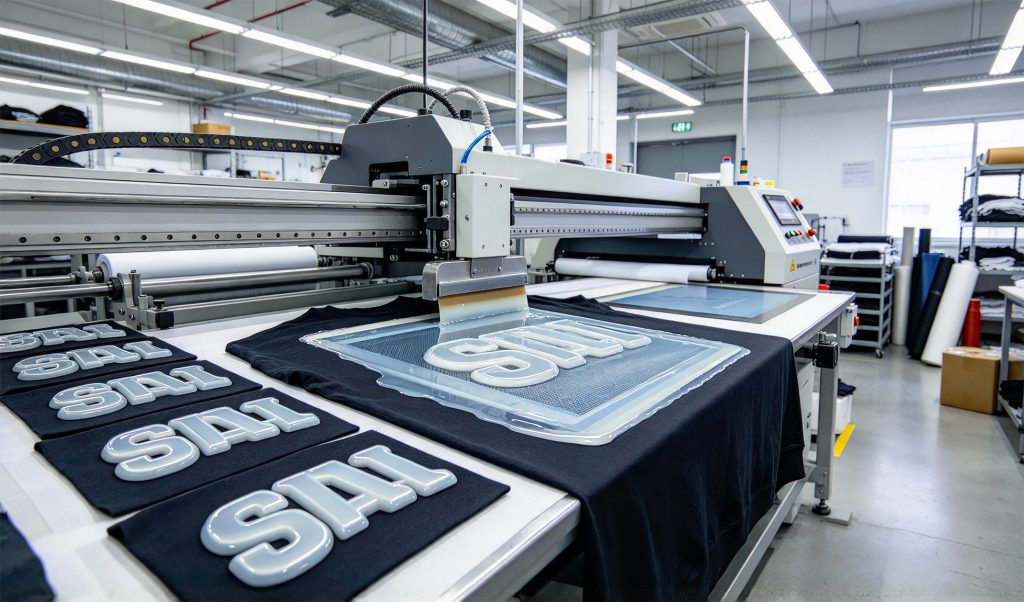
What Makes Embossed Silicone Gel Different from Standard Silicone Printing
Standard silicone printing produces a flat or slightly raised surface. Embossed silicone gel goes further. The material is formulated to hold a defined three-dimensional structure after heat pressing or mold forming, creating a raised pattern with clear edges and a controlled height that remains stable through wear and washing.
The key difference lies in the rheology of the gel. An embossed silicone system must flow sufficiently during application to bond with the fabric, yet resist collapsing when the mold or embossing plate applies pressure and heat. This balance is what separates a production-ready embossed silicone gel from a generic silicone paste that produces inconsistent heights or blurred pattern edges.
In practical terms, factories working with embossed silicone gel need to control three variables tightly: the viscosity of the gel during printing, the temperature and pressure of the embossing step, and the curing profile after forming. A material that performs well in one of these areas but fails in another will generate scrap and rework.
Where Embossed Silicone Gel Delivers the Most Value
Screen and Digital Printing Factories
Screen printing operations are the most common entry point for embossed silicone gel. The material can be applied through a mesh screen, partially gelled, then formed under heat and pressure to create raised logos, geometric patterns, or textured panels. For factories already running silicone or high-density paste, adding embossed silicone capability expands the range of effects they can offer brand clients without changing the entire production setup.
Digital printing factories face a different challenge. While digital equipment excels at color detail, creating tactile dimension requires a separate application step. Embossed silicone gel can be applied as a spot effect over or alongside digitally printed graphics, giving print providers a way to add premium tactile elements to short-run and customized work.Factories exploring this combination often pair embossed silicone effects with digital pretreatment solutions to ensure the printed base and the raised silicone layer bond reliably.
Garment and Apparel Manufacturers
In apparel, embossed silicone gel is used for chest logos, sleeve badges, hem tags, and all-over texture patterns. The material’s ability to bond to cotton, blends, and synthetic knits makes it versatile across casual wear, sportswear, and fashion basics. The critical performance requirement here is flexibility: an embossed logo that cracks after the first wash or feels rigid against the skin will not pass brand quality checks.
Production teams should verify that the embossed silicone gel remains soft after curing and maintains adhesion through repeated laundering. These are not abstract concerns—they determine whether a garment order ships or gets rejected at inspection.
Footwear and Shoe Material Production
Footwear places some of the highest demands on embossed silicone gel. Shoe uppers involve curved surfaces, flex zones, and constant abrasion. Embossed silicone used on shoe side panels, heel counters, or tongue branding must survive flexing without delamination and resist scuffing without losing its surface definition.
Factories supplying shoe brands typically evaluate embossed silicone gel on adhesion to mesh, synthetic leather, and textile uppers, as well as performance after repeated bending. The material must also be compatible with the heat and pressure ranges used in shoe upper assembly, which differ from flat textile printing conditions.
Bags, Umbrellas, and Luggage Fabric Processing
Bag and luggage manufacturers use embossed silicone gel for brand plates, handle accents, and decorative panels on coated fabrics, nylon, and polyester. The challenge here is adhesion to low-surface-energy substrates. Fabrics treated with water-repellent finishes or heavy coatings can resist silicone bonding if the material is not formulated for these surfaces.
Umbrella fabric presents similar issues. The base fabric is often thin and coated, and the embossed silicone must form a durable bond without distorting or stiffening the fabric excessively. Factories processing these materials should test embossed silicone gel on their actual production fabric, not just on a generic cotton swatch.
Home Textiles, Bedding, and Decorative Fabrics
The home textile sector uses embossed silicone gel more selectively, primarily for decorative accents on bedding, cushions, and upholstery. The appeal is the combination of visual dimension and tactile quality—a raised pattern that can be felt as well as seen. For these applications, the material’s softness and wash durability are usually the deciding factors. Decorative fabric converters and coating lines that already apply functional finishes can integrate embossed silicone as a value-added effect for hospitality and retail bedding programs.
Production Considerations When Working with Embossed Silicone Gel
Substrate Compatibility Must Be Tested, Not Assumed
One of the most common production failures with embossed silicone gel occurs when the material is applied to a fabric that has not been properly evaluated. Cotton and cotton blends generally accept silicone bonding well. Synthetic fabrics, especially those with slick or coated surfaces, require formulation adjustments or surface preparation to achieve reliable adhesion.
Factories should establish a simple test protocol before running production: apply the embossed silicone gel to the actual substrate, cure according to the recommended schedule, then perform a wash test and a manual peel check. This step takes minimal time and prevents larger losses later.
Heat Press Parameters Require Discipline
The embossing step is where the three-dimensional effect is created, and it is also where inconsistency creeps in. Temperature that is too low produces weak structure and poor durability. Temperature that is too high can cause the silicone to flow excessively, flattening the pattern or causing discoloration. Pressure must be even across the platen; uneven pressure creates variable pattern height across a single panel.
Production managers should document the approved temperature, pressure, and dwell time for each embossed silicone gel they use, and verify these parameters at the start of each shift. Small drifts in press conditions account for a significant share of embossing defects.
Curing and Handling After Forming
Embossed silicone gel continues to cure after the heat press step. Parts should not be stacked or packed immediately after forming. Allowing adequate cooling and stabilization time prevents deformation and helps the embossed structure reach its final hardness and elasticity.
For factories running high-volume production, this handling requirement can become a bottleneck. Planning the workflow so that embossed pieces have a defined cooling stage before folding or packing is essential for consistent output.
What to Look For in an Embossed Silicone Gel Supplier
The supplier relationship matters as much as the material specification. Factories need a partner who understands how embossed silicone behaves across different fabrics and can provide guidance when a new substrate or effect is requested.
A reliable supplier should offer clear technical documentation, consistent batch-to-batch quality, and responsive support when production questions arise. For importers and distributors serving multiple downstream factories, the supplier’s ability to maintain consistent quality across shipments is especially important—a material that performs well in one container but behaves differently in the next creates problems throughout the supply chain.
Caigle has been producing water-based textile printing materials since its establishment in Guangdong, with a focus on silicone series products alongside digital inks and printing pastes . The company’s product range includes silicone materials for textile and shoe applications, supported by an understanding of how these materials perform in real production environments. Factories evaluating embossed silicone gel can review Caigle’s silicone series and discuss their specific substrate and effect requirements with the technical team.
Conclusion
Embossed Silicone Gel is a production material that rewards careful selection and disciplined process control. The factories that succeed with it are not necessarily the ones with the most advanced equipment—they are the ones that test the material on their actual substrates, document their press parameters, and work with a supplier who understands the difference between a lab sample and a production run.
For screen printers, garment manufacturers, footwear producers, bag factories, and home textile converters looking to add or improve embossed effects, the priority should be finding a silicone gel system that delivers consistent structure, reliable adhesion, and durable softness across the fabrics and conditions that matter to their business. Caigle’s silicone series is developed for exactly this kind of practical, production-oriented performance.
Frequently Asked Questions
Can embossed silicone gel be used on synthetic fabrics like polyester and nylon?
Yes, but adhesion should be verified on the specific fabric and finish. Some synthetic fabrics with coatings or water-repellent treatments require formulation adjustments or surface preparation to achieve reliable bonding. Always run a wash and peel test on production fabric before committing to a full run.
How durable is the embossed effect after washing?
Properly applied and cured embossed silicone gel is designed to maintain its structure and adhesion through repeated home laundering. Durability depends on the substrate, the cure conditions, and the quality of the silicone material. Factories should confirm wash performance against the standards their brand clients require.
Does embossed silicone gel work for both screen printing and heat transfer applications?
Embossed silicone systems are commonly applied by screen printing followed by heat press forming. Heat transfer methods also exist, but the material formulation and process parameters differ. Factories should specify their intended application method when discussing material options with a supplier.
What is the difference between embossed silicone gel and high-density printing paste?
High-density paste builds height through repeated printing passes and is typically plastisol or water-based. Embossed silicone gel uses a silicone base that is formed under heat and pressure to create a raised pattern with a different hand-feel and performance profile—generally softer, more flexible, and with distinct elastic recovery.
Can Caigle help evaluate whether embossed silicone gel is suitable for a specific fabric or product?
Yes. Caigle’s technical team works with factories to understand their substrate, effect requirements, and production conditions. Sharing fabric samples and target performance criteria helps the team recommend the appropriate silicone material and provide guidance on application parameters.
Ready to discuss embossed silicone gel for your production line?
Contact Caigle’s technical team to share your fabric specifications, target effect, and production conditions. We will help you identify the right silicone material and provide the support you need to move from sample to stable production.
Contact Caigle today to request material information and discuss your embossed silicone requirements.