News

Digital Pretreatment Solution

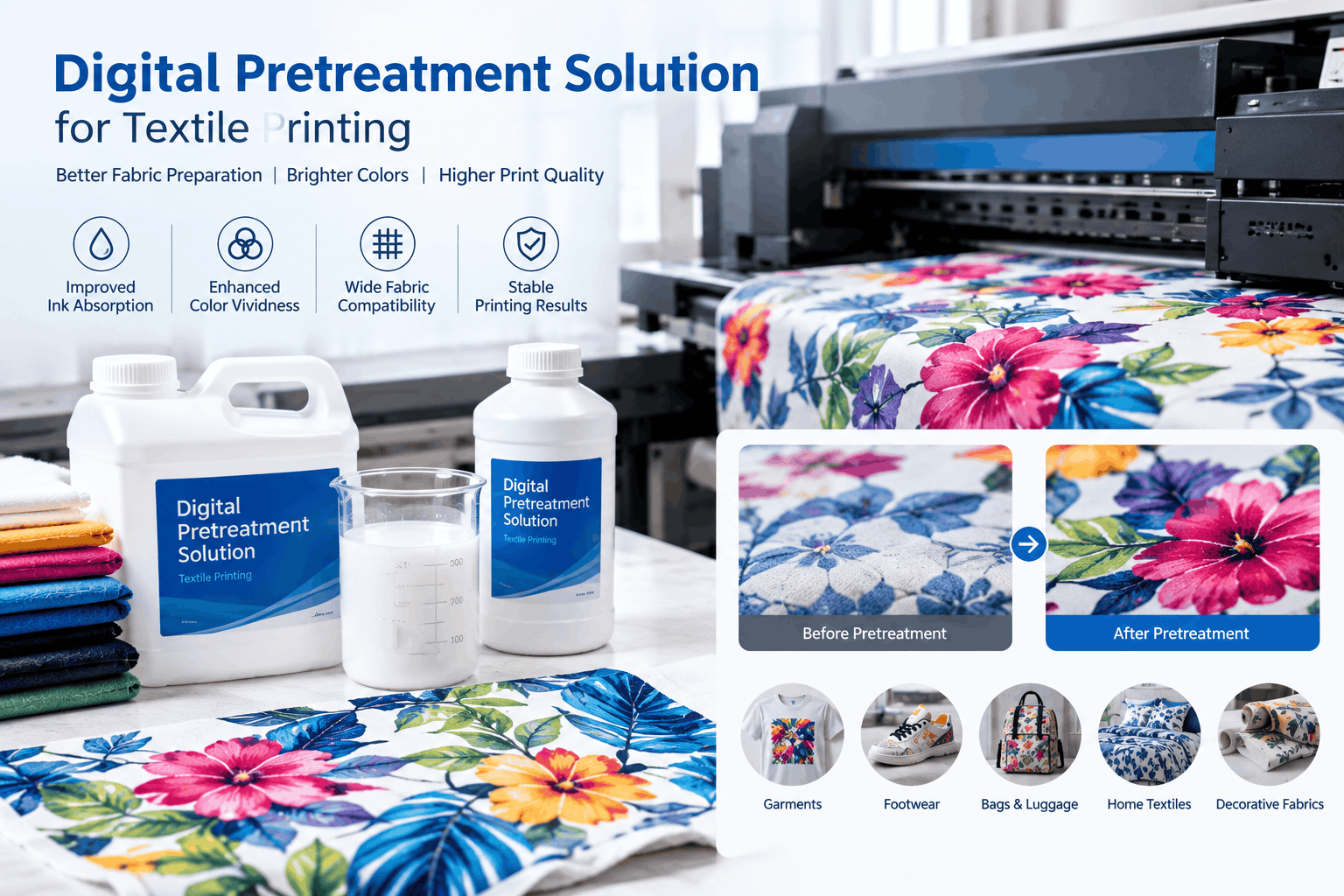
Digital Pretreatment Solution: A Guide to Textile Printing

Digital textile printing gives garment manufacturers and textile printing factories greater flexibility when producing detailed graphics, colorful patterns, customized apparel, and short production runs. However, print quality depends on more than the printer and ink. The condition of the fabric before printing can also influence color appearance, image definition, ink interaction, and the consistency of the finished product. A Digital Pretreatment Solution is an important part of many digital textile printing workflows. It is used to prepare a suitable fabric surface for subsequent printing, helping manufacturers manage the interaction between the textile, pretreatment material, and ink system. For screen and digital printing factories, garment manufacturers, footwear producers, luggage and umbrella fabric processors, and home textile companies, selecting an appropriate pretreatment material requires careful consideration of the substrate and intended application. A solution that performs well on one fabric or printing system may not deliver the same result on another. Caigle
Flocking Paste

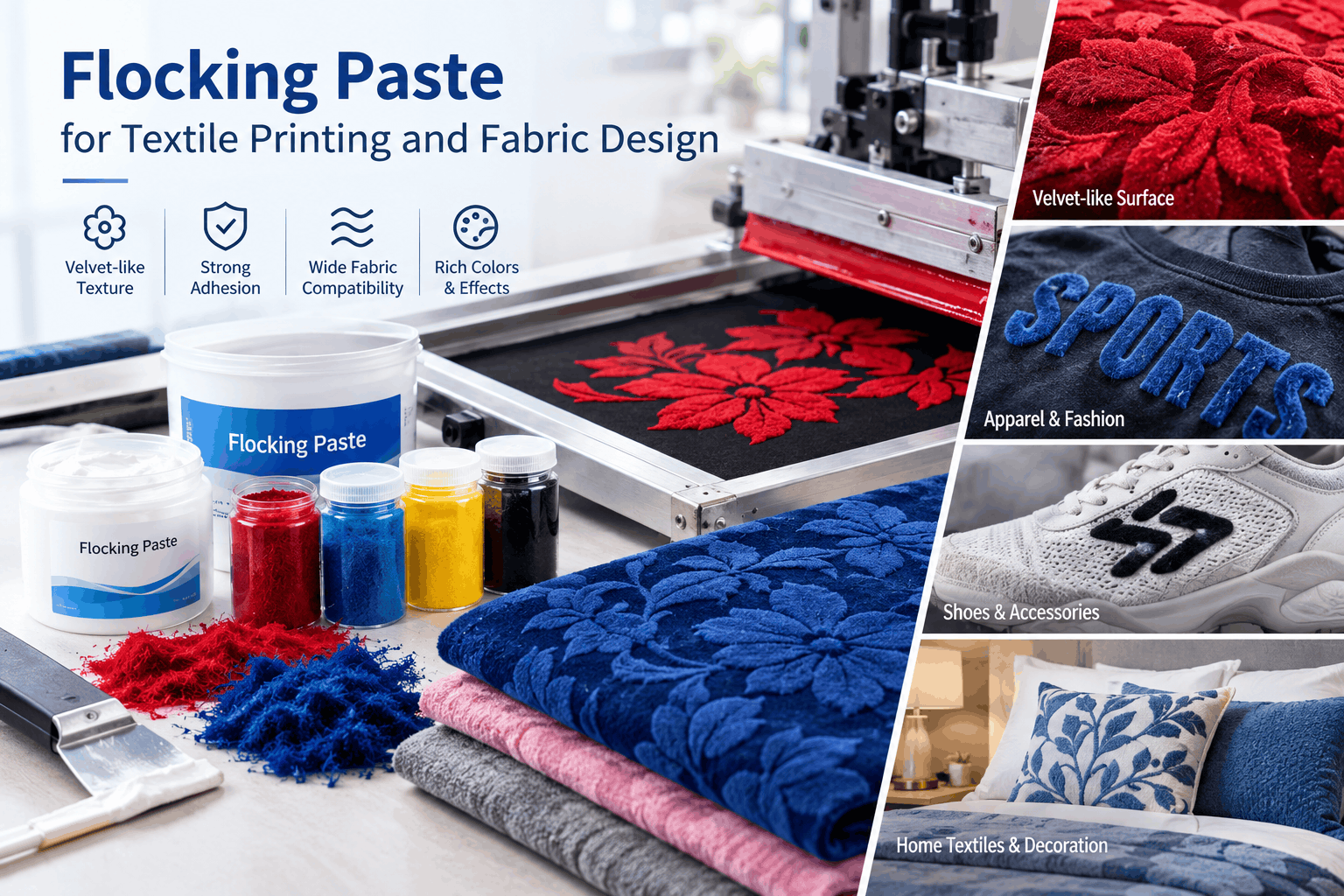
Flocking Paste for Textile Printing and Fabric Design

In the textile printing industry, visual appearance and surface texture can be just as important as color. Fashion brands, garment manufacturers, footwear producers, and home textile companies are continually looking for ways to make their products stand out. Flocking is one technique that can create a distinctive raised, velvet-like surface, adding a tactile dimension to printed designs. Flocking Paste is a specialized material used in textile printing processes involving flocked effects. Depending on the selected system, the paste helps create an adhesive layer that holds flock fibers on the fabric surface. The final appearance depends on the paste formulation, fiber characteristics, substrate, application method, and production conditions. For screen printing factories, fabric coating processors, textile chemical importers, and distributors, understanding Flocking Paste is essential when evaluating materials for decorative textile applications. The right selection can help manufacturers achieve the intended texture while maintaining suitable adhesion, appearance, and production consistency. This

Textile Printing Materials Supplier

How to Choose a Textile Printing Materials Supplier for Different Fabrics and Production Needs

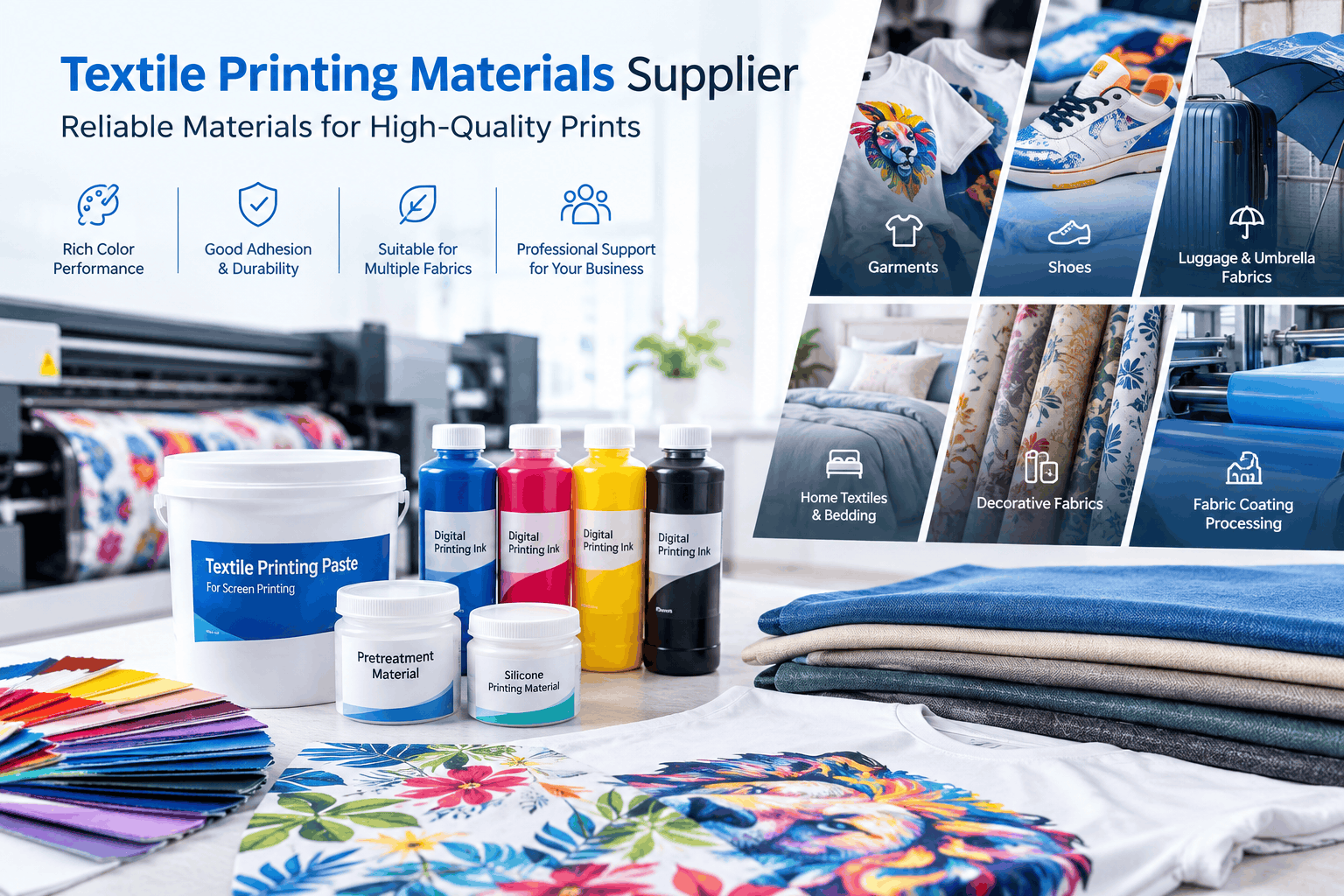
Choosing the right textile printing materials supplier is an important decision for garment manufacturers, textile printing factories, fabric coating companies, and international distributors. The materials used in production influence print appearance, fabric feel, adhesion, durability, process compatibility, and the consistency of finished products. A supplier that understands these requirements can help buyers make more informed purchasing decisions and establish a more stable production workflow. Today’s textile industry serves a wide range of applications, from fashion garments and sportswear to shoes, luggage, umbrellas, bedding, and decorative fabrics. Each application may require a different combination of printing materials, surface treatments, and production processes. As a result, buyers need to evaluate more than the quoted unit price when comparing suppliers. For importers, wholesalers, and textile chemical distributors, the challenge is to identify a partner that can provide suitable product options, dependable communication, and support for changing customer requirements. This guide explains what to

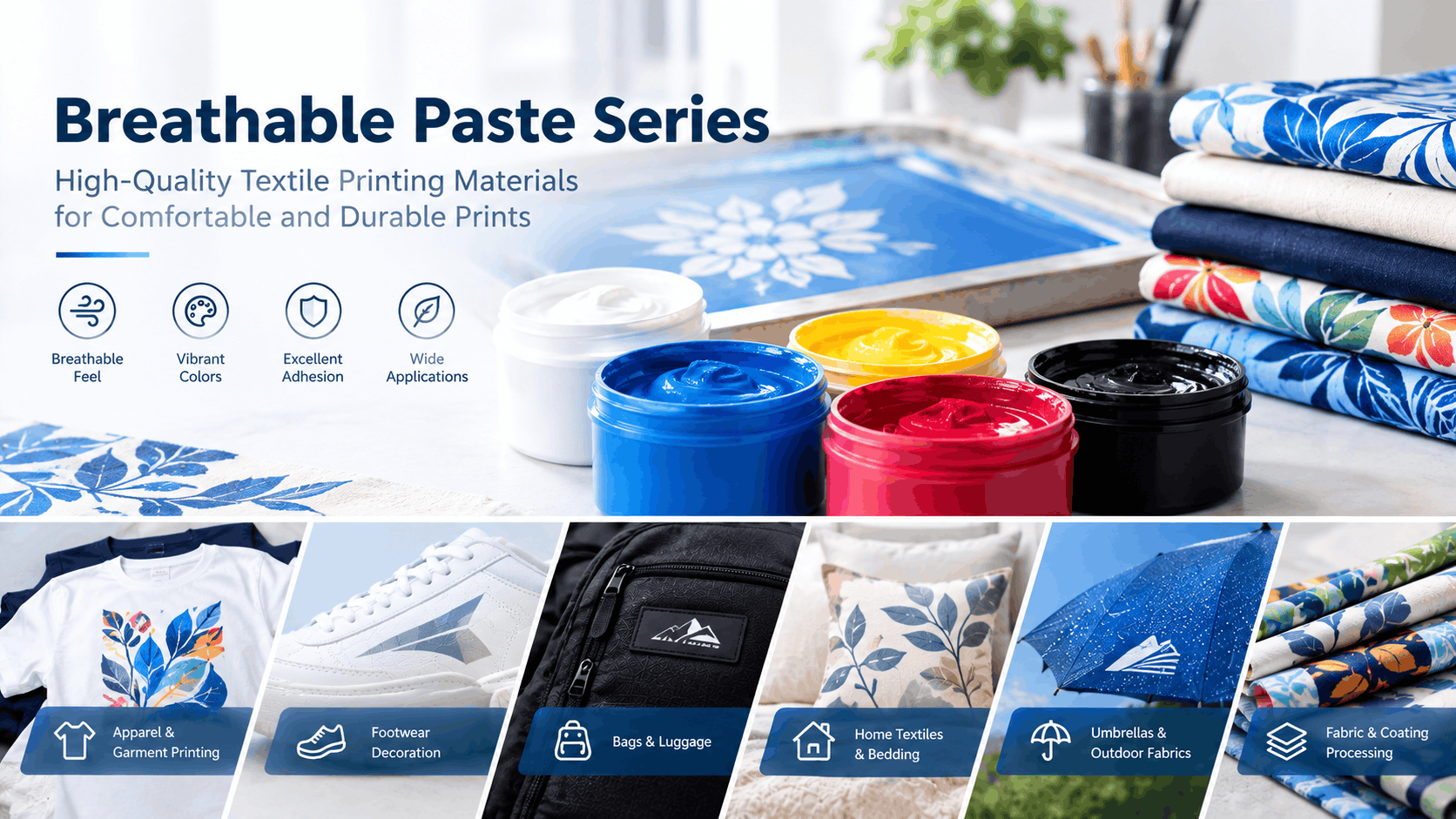
Breathable Paste Series

Breathable Paste Series: A Buyer’s Guide for Textile Printing

Textile manufacturers face an ongoing challenge: producing attractive printed designs while maintaining the comfort, flexibility, and original character of the fabric. For garments, sportswear, footwear materials, bags, umbrellas, bedding, and decorative textiles, the printing material can significantly influence the final product’s appearance and feel. The Breathable Paste Series is worth evaluating when textile printing projects require particular attention to printed-surface comfort and hand feel. However, selecting a suitable material involves more than comparing product names. Buyers need to consider fabric composition, printing method, graphic coverage, production conditions, quality expectations, and total manufacturing cost. For screen printing factories, garment manufacturers, textile coating processors, and overseas printing-material distributors, a structured selection process can help reduce trial-and-error during production. This guide explains the key considerations for evaluating breathable printing paste, preparing samples, and working with a textile printing material supplier such as Caigle. What Is the Breathable Paste Series? The Breathable Paste Series

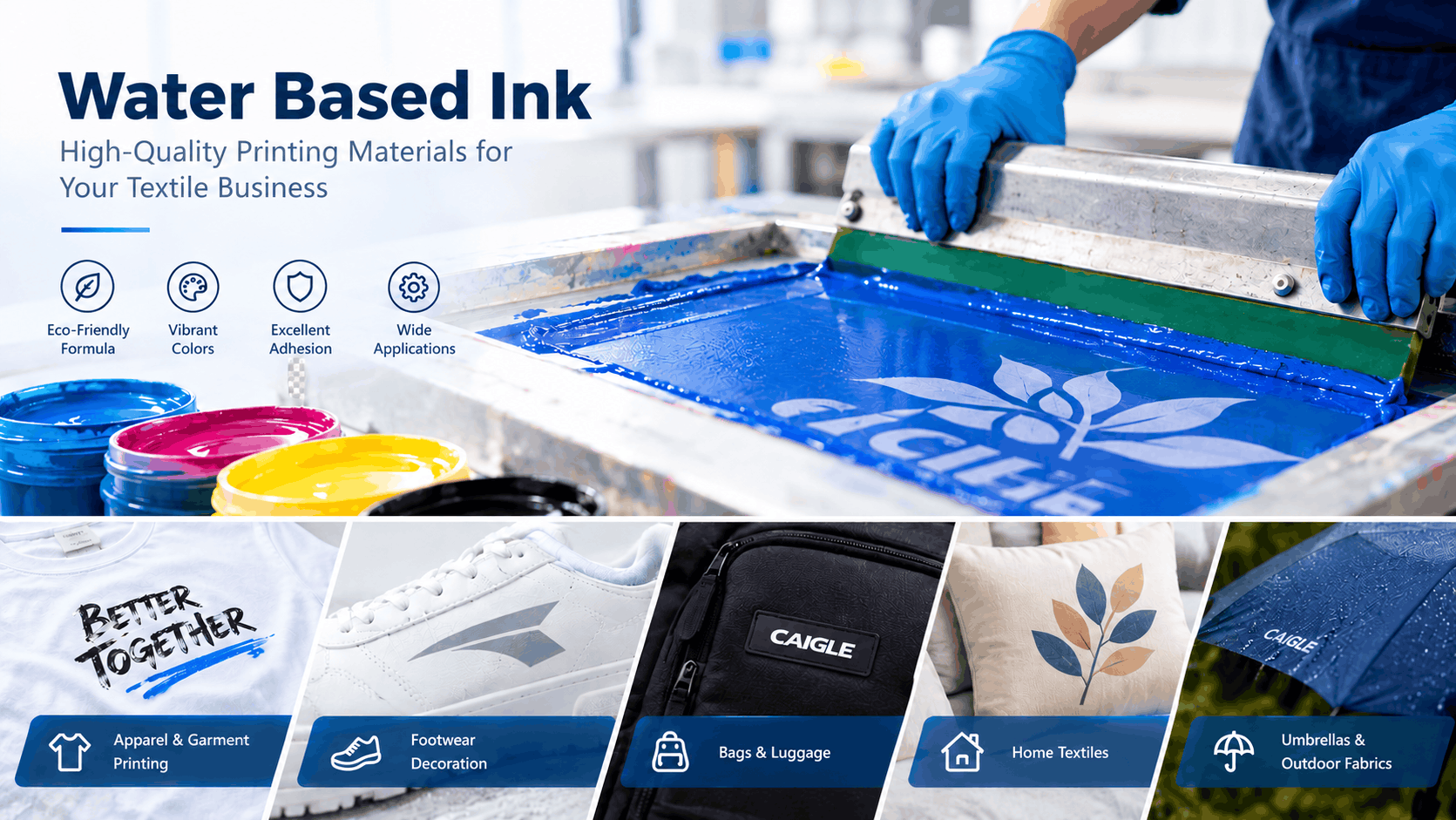
Water Based Ink

Water Based Inl: A Practical Guide for Textile Printing Buyers

The textile printing industry serves a wide range of manufacturing sectors, from garment production and footwear decoration to luggage, home textiles, and outdoor fabric products. As brands introduce more designs and manufacturers manage increasingly diverse orders, choosing suitable printing materials has become an important part of maintaining product quality and production efficiency. For screen printing factories, digital printing companies, garment manufacturers, and material distributors, the most important consideration is not simply the name of a material. It is whether the formulation matches the substrate, printing equipment, finished-product requirements, and manufacturing workflow. Different printing processes create different material requirements. A screen printing paste may need suitable application characteristics for the selected mesh and printing method, while digital textile printing materials must be compatible with the relevant equipment and ink delivery system. Shoe materials and coated fabrics may require additional attention to adhesion and surface preparation. Caigle develops and supplies textile printing

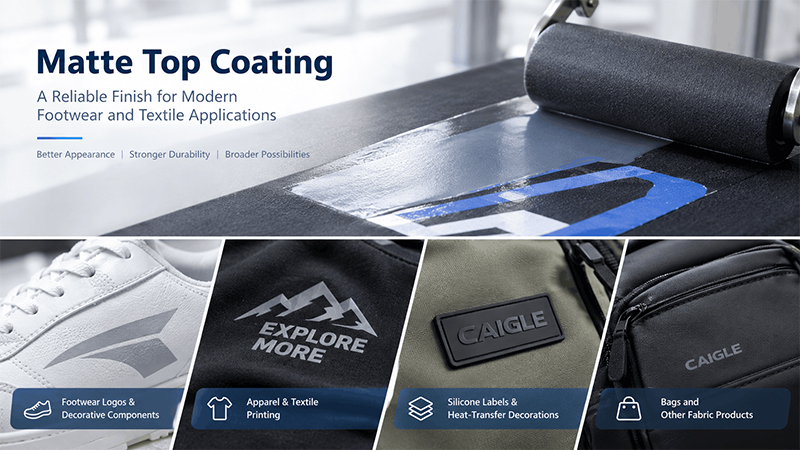
Matte Top Coating

Why Matte Top Coating Matters in B2B Manufacturing

In footwear, apparel, and textile decoration, surface finishing influences how a product looks, feels, and performs during everyday use. As brands develop more distinctive product designs, manufacturers need finishing solutions that complement the original artwork while meeting the practical requirements of production. Matte Top Coating is an important finishing concept for businesses seeking a refined, low-gloss appearance on selected printed and decorated surfaces. Unlike a highly reflective finish, a matte surface diffuses reflected light to create a more understated visual effect. This appearance can be suitable for footwear logos, decorative labels, printed graphics, and selected branding components. However, a successful finish depends on more than its visual characteristics. Material compatibility, adhesion, flexibility, processing conditions, and consistency must also be evaluated. For B2B buyers, selecting a suitable coating involves balancing design requirements with manufacturing efficiency and finished-product expectations. A material that performs well on one substrate may not produce the same

Glossy Top Coating: A Practical Guide to High-Gloss Finishes for Textile and Footwear Manufacturers

Introduction: Why Glossy Top Coating Matters in Product Manufacturing In today’s competitive textile, apparel, and footwear markets, surface appearance plays an important role in product differentiation. Brands need decorative finishes that attract attention, complement product design, and meet the practical demands of manufacturing. Glossy Top Coating is a relevant finishing concept for manufacturers looking to achieve a smooth, reflective appearance on printed graphics, decorative labels, logos, and selected product surfaces.   A well-selected glossy finish can help printed details appear more vivid and visually defined. However, appearance alone is not enough for industrial production. Manufacturers must also consider substrate compatibility, adhesion, flexibility, abrasion resistance, curing conditions, and consistency between production batches. These factors influence whether a finishing material can meet the requirements of a particular application. For B2B buyers, choosing a suitable finishing solution requires more than comparing product descriptions. It involves evaluating the complete printing process, from the base

Caigle

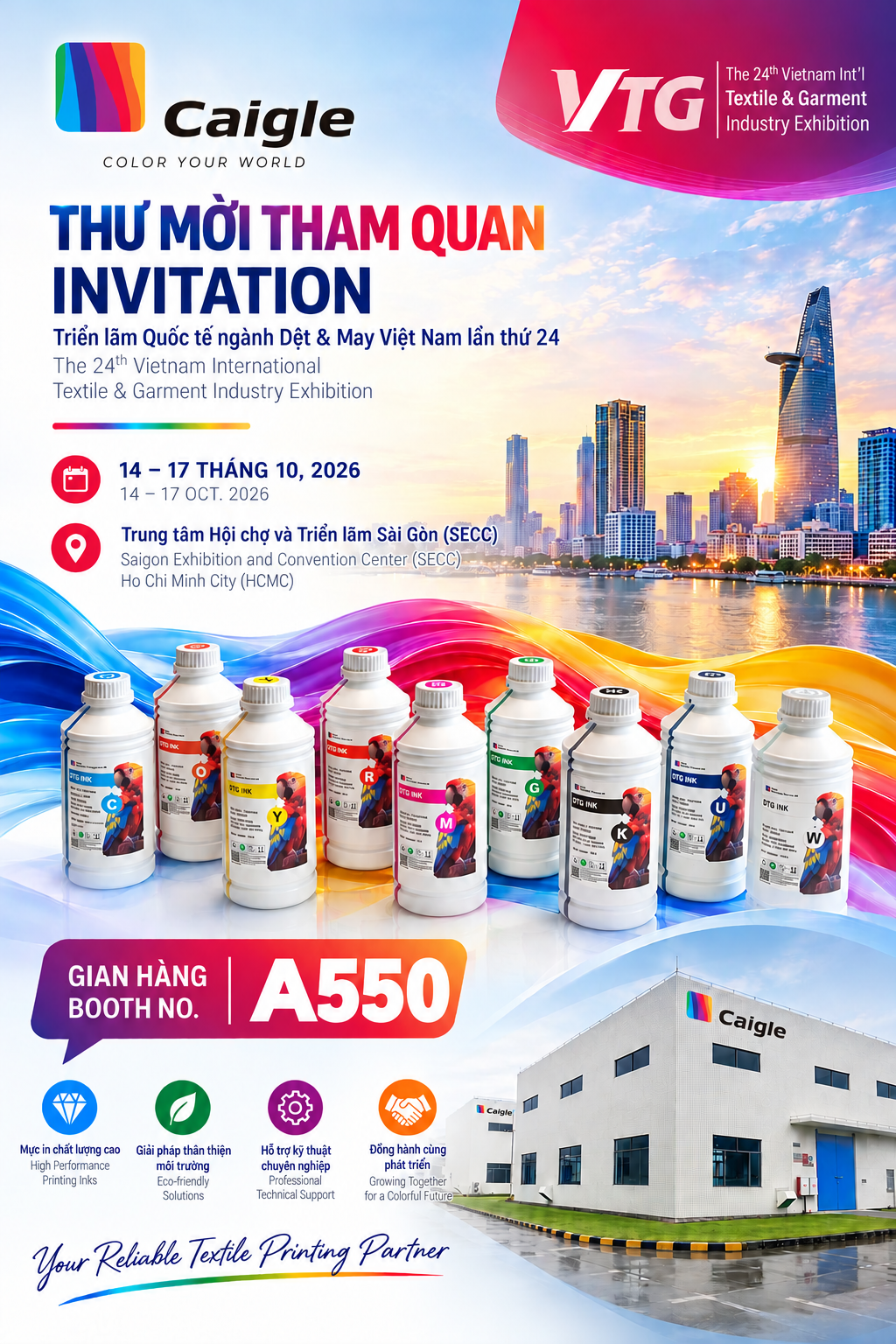
Caigle Connects with Textile Printing Professionals at VTG 2026

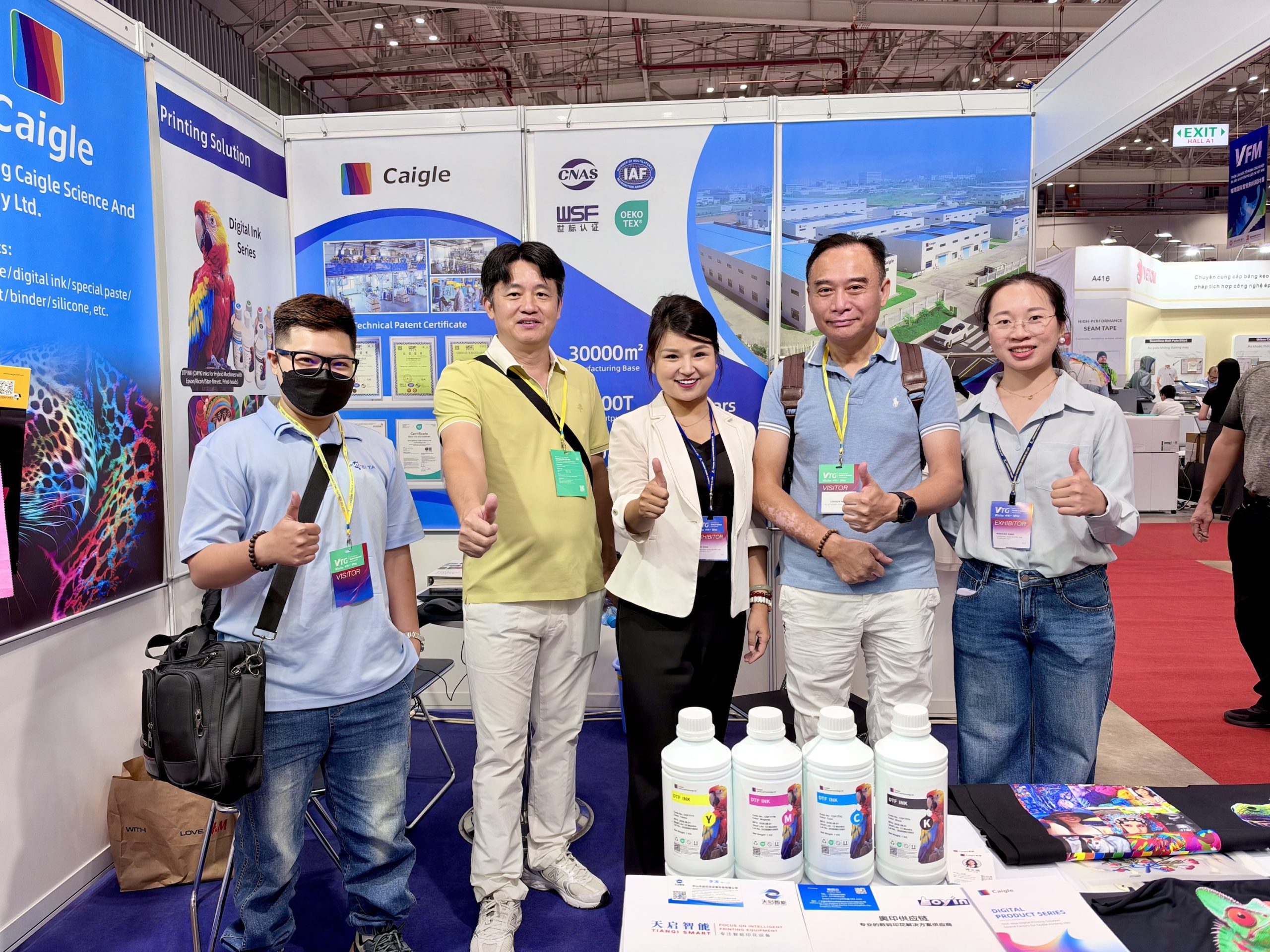
Caigle is meeting with industry professionals at the 24th Vietnam International Textile & Garment Industry Exhibition (VTG 2026), taking place from October 14 to 17 at the Saigon Exhibition and Convention Center (SECC) in Ho Chi Minh City, Vietnam. During the exhibition, visitors have the opportunity to explore Caigle’s digital textile printing materials, review printed textile samples and discuss their production requirements with the team. The booth features DTF Ink products, colorful printed designs and textile printing applications that demonstrate how digital printing materials can be used in garment decoration. The exhibition also provides a valuable opportunity for Caigle to exchange ideas with customers, understand changing market needs and build connections with businesses across the textile and garment industry. On-Site Discussions About Digital Textile Printing At the exhibition booth, Caigle’s team is engaging with visitors to discuss digital printing materials and their applications. Conversations cover product characteristics, printing workflows and

VTG 2026

Caigle Invites You to VTG 2026 in Vietnam

Caigle is pleased to invite textile manufacturers, garment producers, printing companies and industry professionals to visit its booth at the 24th Vietnam International Textile & Garment Industry Exhibition (VTG 2026). The exhibition will take place from October 14 to 17, 2026, at the Saigon Exhibition and Convention Center (SECC) in Ho Chi Minh City, Vietnam. Visitors can meet the Caigle team at Booth A550 to learn more about digital textile printing inks, textile printing materials and solutions designed for professional printing applications. As demand for flexible textile production and customized garment printing continues to grow, selecting suitable printing materials has become increasingly important for manufacturers. Caigle looks forward to connecting with industry partners, exchanging technical ideas and exploring opportunities for future cooperation at VTG 2026. Exhibition Information Exhibition: The 24th Vietnam International Textile & Garment Industry Exhibition (VTG 2026) Date: October 14–17, 2026 Venue: Saigon Exhibition and Convention Center (SECC)

Digital Textile Printing Ink

Digital Textile Printing Ink for Modern Textile Production

As textile printing continues to move toward digital production, printing companies are looking for materials that can support flexible workflows, detailed patterns and different fabric applications. Digital Textile Printing Ink has become an important material in modern textile printing because it allows manufacturers to produce customized designs without relying entirely on traditional printing processes. For garment manufacturers, textile printers, printing service providers and distributors, choosing suitable ink is closely related to fabric type, printing equipment, printhead compatibility, curing conditions and final application requirements. Caigle develops a range of digital printing materials for professional textile printing applications, including DTG Ink, DTF Ink and supporting textile auxiliaries. What Is Digital Textile Printing Ink? Digital Textile Printing Ink is formulated for use with digital printing equipment to transfer images, patterns and other graphic elements onto textile substrates. Unlike traditional printing methods that often require screens or plates for individual designs, digital printing allows

China National Day Holiday

China National Day Holiday Notice 2026 | Caigle

As China’s National Day approaches, Caigle would like to sincerely thank all our customers, partners, and friends around the world for your continued trust and support. To celebrate the China National Day holiday, our company will arrange a holiday break from October 1 to October 5, 2026. Holiday Schedule 📅 October 1–5, 2026🏢 Caigle Office & Factory Holiday During this period, our office and production operations will be temporarily suspended. Customer inquiries, order confirmations, production arrangements, and other business responses may take slightly longer than usual. We recommend that customers with urgent orders or upcoming projects contact our team in advance so that we can make the necessary arrangements before the holiday. Thank You for Your Continued Support Over the years, Caigle has been committed to providing reliable printing materials and textile printing solutions for customers around the world. Every order, inquiry, and partnership is important to us. We truly

DTG Ink

DTG Ink for Direct to Garment Textile Printing

Direct to Garment printing provides textile manufacturers with a digital method for printing graphics directly onto garments. Instead of transferring an image from a separate film, the printing equipment deposits ink directly onto the textile surface. This makes DTG Ink an important part of the digital garment printing process. DTG technology is commonly considered for detailed graphics, photographs, gradients, customized apparel and designs that require direct digital reproduction. For professional printing businesses, the quality of the finished garment depends on more than the ink itself. Fabric preparation, garment surface, printer settings, pretreatment, printhead condition, drying and curing all influence the final result. Caigle lists DTG Ink within its Digital Coating Ink Series, alongside DTF Ink, DTC Ink and DTP Ink. The same digital product system also includes pretreatment and coating materials for different digital textile printing processes. What Is DTG Ink? DTG Ink is a digital printing ink formulated for

Scroll to Top